The customer's garage: the car, the kid and the remote
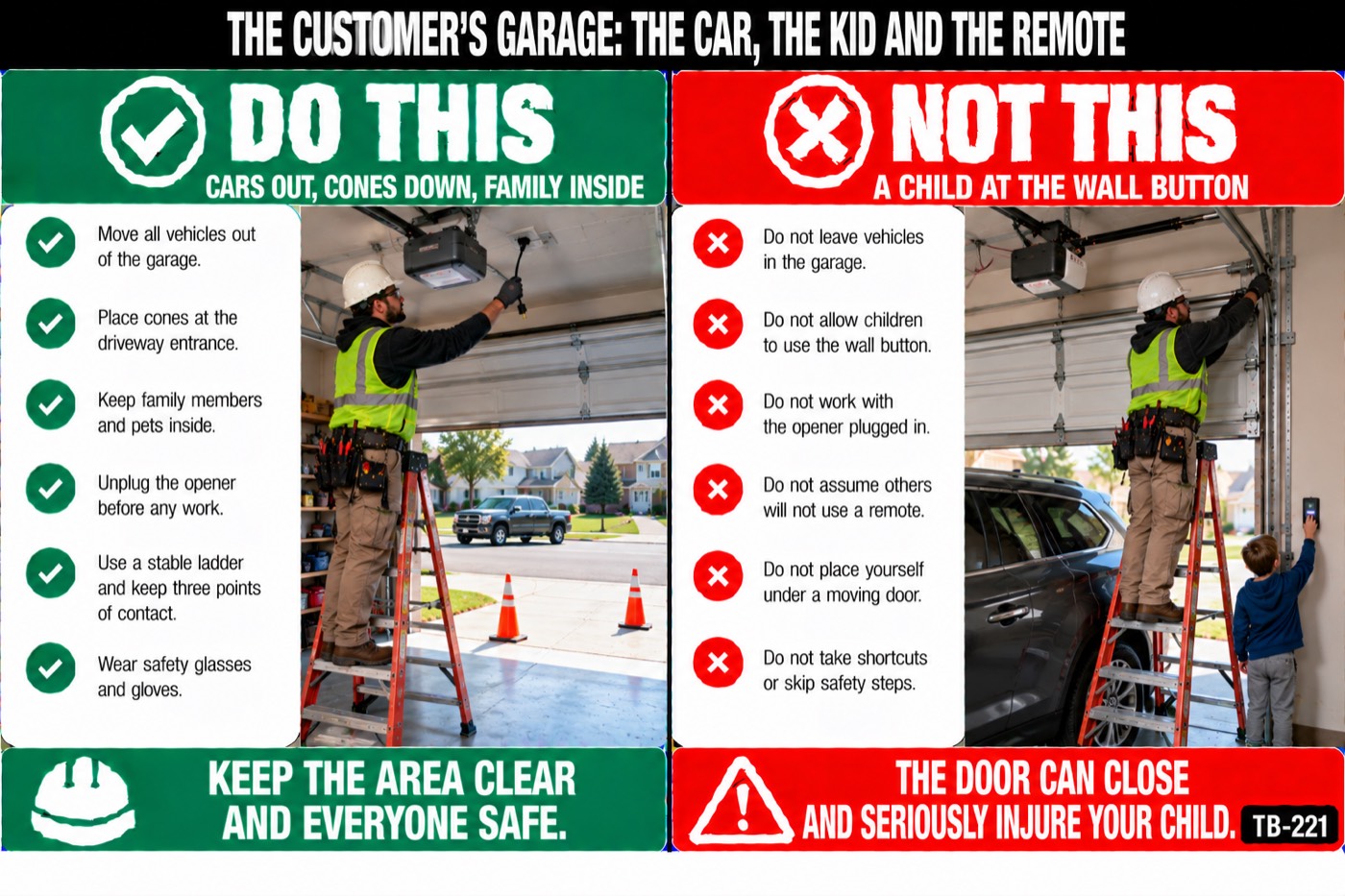
The customer's car is nosed in under the door, a six-year-old is at the wall button, and the dog is in the garage. That is a normal Tuesday, and every one of them can be under 300 pounds of door the moment it moves.
The points
- Doors have come down on hoods and windshields, kids have hit the wall button with a technician on the ladder, and a door tested with the family standing in the opening has crushed a hand. This is the part of the job nobody trains you for.
- Before the first tool comes off the truck: cars all the way out or all the way in, the driveway coned, and the remotes collected or the opener unplugged.
- Tell the customer in words that nobody presses anything until you say the job is done, and ask them to keep the kids and the dog in the house. Then check that they did.
- Every test cycle: you look at the whole opening, you say 'door moving', and you watch the full travel. The 2x4 and the photo eye tests happen with the family out of the opening, not watching from under it.
- Before you leave, show the customer the release, the photo eyes and the monthly reverse test. A door that fails the reverse test does not get handed back.
Why it goes wrong
A residential job is a job site inside someone's home, and the public on this site is a family that does not know a door is a machine. The wall button is at counter height, right where a child stands to watch. A car parked halfway in is parked in the path of the bottom section, and a door that drops on it costs a windshield and, if someone is getting out of the car, more than that.
Remotes are the hazard you cannot see: one on each visor, one on the keychain, a keypad on the jamb, a phone app, and a built-in button in a newer car. You cannot collect them all, which is why the plug comes out of the ceiling outlet at the start and goes back in when you say so. The customer hears it from you: the door does not move until you say it does.
The test cycles are when the family shows up. They want to see the new door go, and the natural place to stand is in the opening. Every test is called out loud, with a look at both sides of the door, and the customer is behind you or inside. The photo eye test with a foot in the beam and the 2x4 test at the center are done by you, not by a kid helping.
Cones in the driveway do two things: they keep a neighbor's car from backing in under a door that is off its springs, and they mark the site as work. A driveway on a street gets the truck parked to block the apron, and the door opening gets tape or a stand if the door is open with no springs on it.
The employer's duty under 1926.20(b) covers this: the program includes the people around the work, not just the crew. The hand-off is part of it. A customer who was shown the release, the photo eyes and the monthly test is a customer who does not tape the eyes together next winter. Warning labels on the springs and the bottom brackets stay on the door.
Questions for the crew
- Who is in this house right now, and where are they going to be while the door moves?
- How many remotes and buttons can start this door, and is the opener unplugged?
- Where is the customer going to stand while we do the reverse test?
To close
Cars out, cones down, opener unplugged, and nobody but us in the opening when this door moves today.
To hold this talk with your crew
1
Read it aloud. Five minutes, before the work starts.
2
Ask the questions. A crew that talks is a crew that remembers.
3
Have them sign on their own phones, and the record is sealed.