Bolting up: the bolt that fell six floors
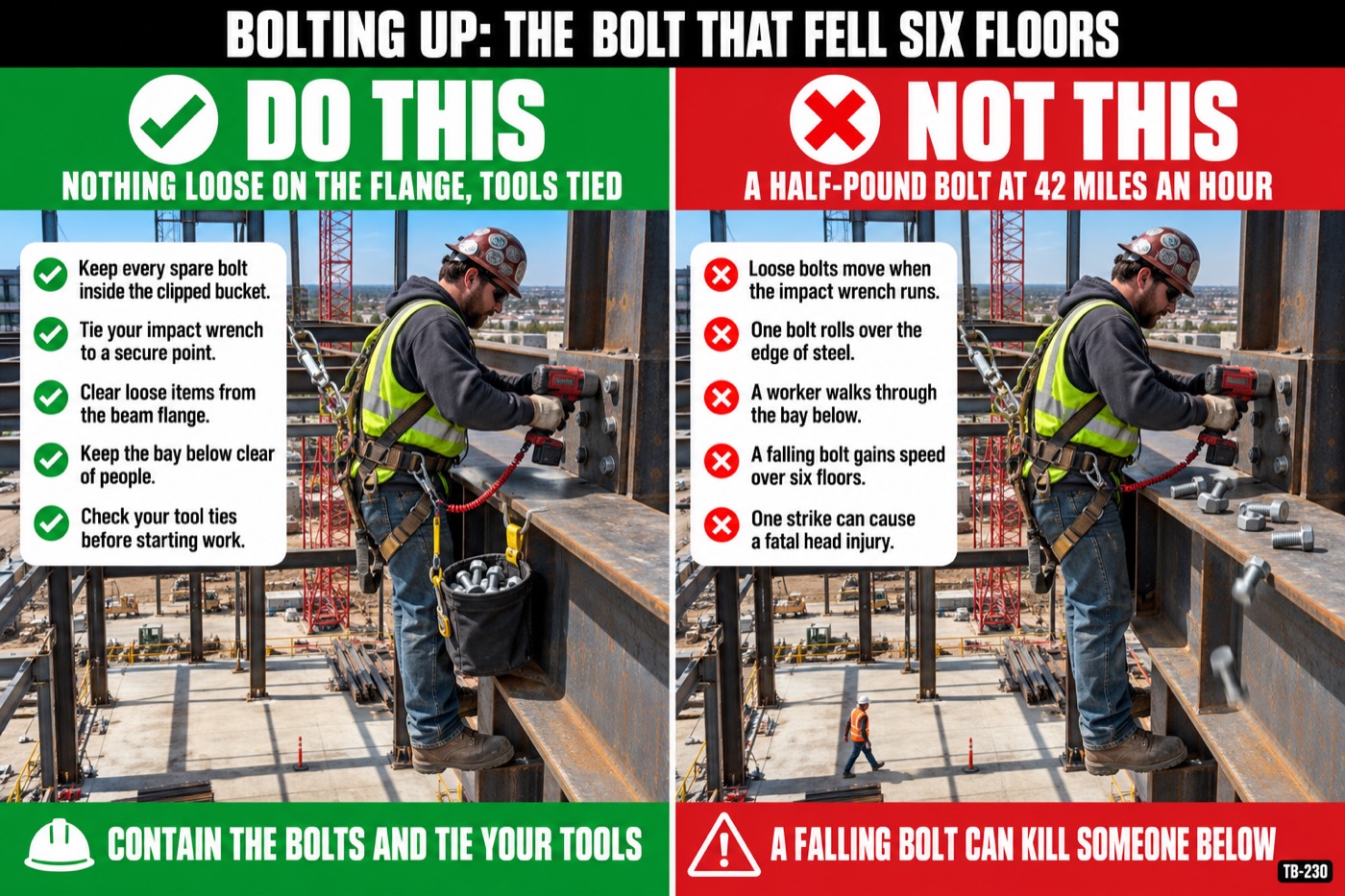
A 3/4-inch bolt with its nut weighs about half a pound. Dropped from 60 feet it arrives at 42 miles an hour, and a hard hat is tested with an 8-pound weight dropped from 5 feet. The bolt is past that.
The points
- What falls off steel is bolts, nuts, drift pins, spud wrenches, and the occasional impact gun, and what it lands on is the crew that was told the bay was clear. A wrench from 30 feet breaks a shoulder. A bolt from 60 feet goes through a hard hat.
- Everything that is aloft and not in your hand is secured: bolts in a bucket that is clipped to the beam, tools on a lanyard or in a holster, drift pins in the bolt bag, leads and hoses tied off. Nothing sits loose on a flange, even for a minute, because the flange is 6 inches wide and it vibrates when the gun runs.
- The impact wrench and the tension-control gun kick when the bolt seats. Both hands on the tool, feet set, tied off, and the reaction bar or the socket never pointed at your leg or the person beside you.
- The drift pin lines up holes. It goes in with the hammer and comes out with the hammer, and the hand that is not swinging is off the connection. Never drive a pin toward someone on the other side of the web.
- Below the bolting crew is a controlled area. The controlling contractor keeps other trades out from under steel erection unless there is overhead protection, and the bolt-up foreman looks down before the first bolt goes in.
Why it goes wrong
Falling objects in steel erection are not accidents of bad luck. They are a bolt that was set on the flange to free a hand, a wrench that was hung on a lanyard with a worn clip, a bucket of bolts hoisted by its handle with the handle on a bent wire. The rule is one sentence, everything aloft that is not in use is secured, and it is written that way because every one of those objects was aloft and not in use when it went.
Tool lanyards are rated by weight. A 1-inch impact wrench is 25 to 30 pounds and it does not hang from a wrist lanyard sold for a 2-pound spud wrench. The lanyard clips to a harness D-ring or the structure, not to a belt loop, and the connection on the tool is a rated attachment point, not a piece of tie wire through the handle. A tool that falls on its lanyard and stops is a tool that did not hit anyone, and that is the whole reason it is there.
The impact wrench: 1,000 to 2,000 foot-pounds of torque, and when the nut seats the tool tries to rotate around the socket. If your wrist is the thing resisting, the tool wins. With the gun on a beam, the stance is feet on the flange, tied off, the body braced, and the reaction pointed where nobody is. A tension-control gun is quieter but the reaction arm on it pinches, and the sheared tip comes off hot.
Drift pins and spud wrenches are the connector's tools and they go in and out of connections with a beam hanging. The pin is tapered steel and the hammer drives it: a miss puts the hammer in the hand holding the pin, and driving a pin out toward someone on the far side of the web puts a 1-pound projectile at their face. Pins in the bag, one out at a time, and call out before you drive one through.
Welding on steel adds the stinger and the lead to the list of things aloft. A lead hung over a beam edge with the stinger dangling is a 5-pound weight on a cord that the next person trips on. Leads tied off, the stinger hung in its holder, slag and rod stubs in a can, not brushed off the flange onto the bay. Hot work and fire watch are their own talk and they still apply up here.
The crew below: the rule puts the duty on the controlling contractor to bar work below steel erection or provide overhead protection, and on the erector to secure what is aloft. On a small job with three trades in one building, that means the erector's foreman and the GC agree on the bay every morning. A cone and a piece of caution tape at the base of the column is not overhead protection, and the plumber does not know it means anything.
Questions for the crew
- What is aloft today that is not on a lanyard or in a clipped bucket, and where is it going?
- Who is working below the bolt-up crew this morning, and who told them?
- Which tools are we running on the beam, and is the lanyard on each one rated for that tool?
To close
Today nothing sits loose on a flange, every tool up there is tied to something, and we look down before we run the first bolt.
To hold this talk with your crew
1
Read it aloud. Five minutes, before the work starts.
2
Ask the questions. A crew that talks is a crew that remembers.
3
Have them sign on their own phones, and the record is sealed.