Fire alarm work: the system is off and nobody knows
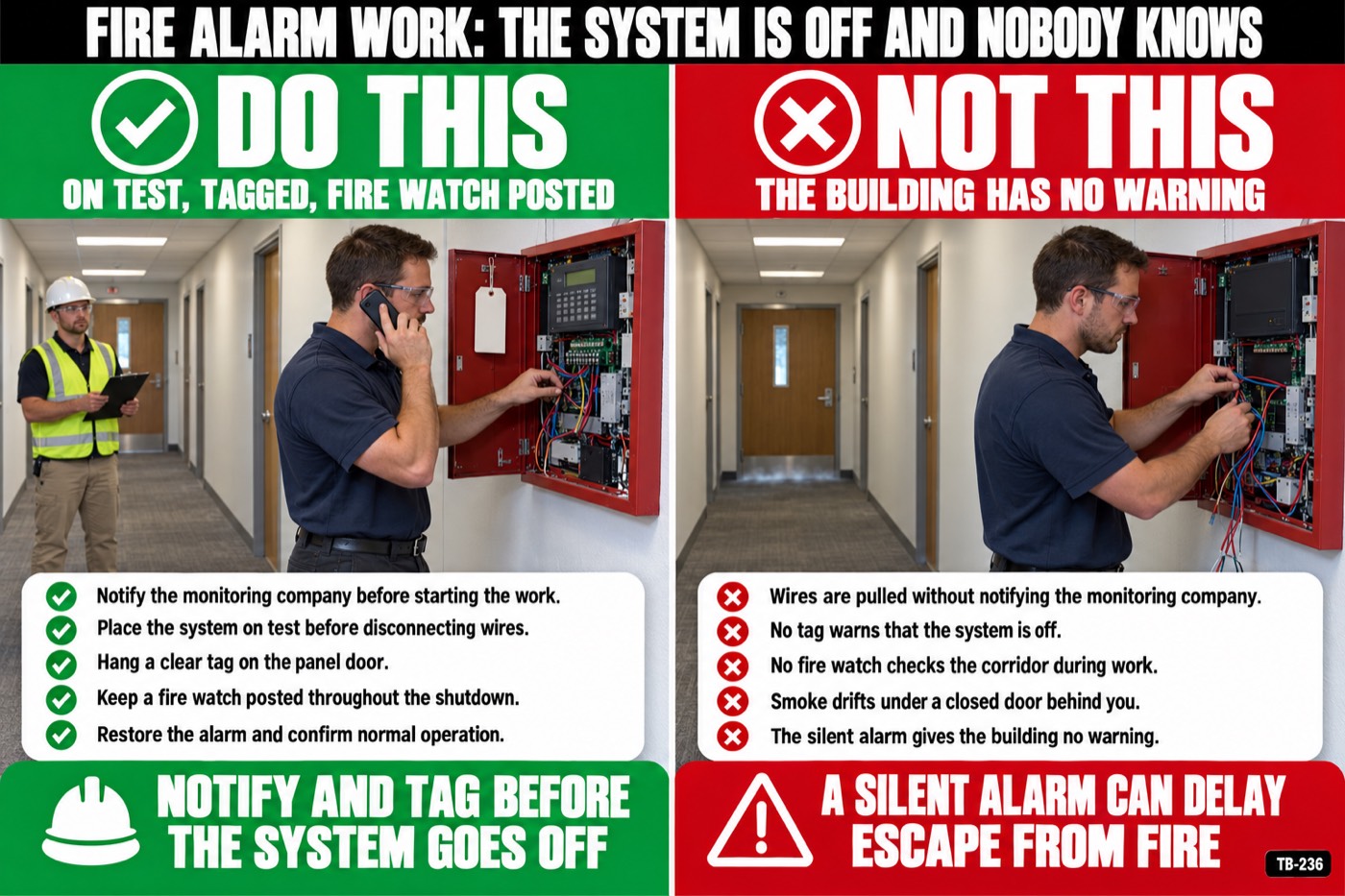
While you have the panel in test, the 400 people upstairs are relying on a fire alarm that cannot tell them anything. If a trash can catches fire in the third-floor break room this afternoon, the first warning is the smoke under the door.
The points
- A fire alarm that is down, silenced, or on test at the monitoring company is a building with no warning and no dispatch. People have died in fires in buildings where the system was impaired for work; the impairment procedure exists because of them.
- Before anything comes offline: the building owner or their representative, the monitoring company, and the fire department or the AHJ are notified, and an impairment tag goes on the panel. The account goes on test with the central station with a start time and a stop time.
- If the system will be down more than four hours in a 24-hour period, the fire code requires a fire watch or the building gets evacuated. The fire watch is a person with nothing else to do, a phone, a route through the building, and a written log.
- Know what the panel controls before you touch it: elevator recall, door holders, HVAC shutdown, smoke control, sprinkler waterflow and the voice system. Silencing a horn is not disabling a zone, and disabling a zone is not disabling the building.
- A test that sounds the alarm empties the building, and in a hospital, a school or a high-rise that is a real event with real injuries. The test is scheduled with the building, announced, and run at a time the building agreed to; when you are done, the account comes off test and you confirm it.
Why it goes wrong
The step crews forget is taking the account off test. The system is restored, everybody leaves at four, and the central station still has the account on test until Monday. A waterflow alarm Saturday night goes nowhere. Restoration means the panel is normal, the tag is off, the monitoring company has confirmed the account is live, and the building has been told, and it means the same name that called it in calls it back.
Impairment is the word in NFPA 72 and NFPA 25 for a system that cannot do its job, planned or not, and the procedure is the same: notify, tag, mitigate, restore, notify. 1926.150 puts the duty on the employer to keep a fire protection program running for the whole job, and an alarm system employees and the fire department can use. On a fire alarm job the program is the impairment procedure, and it is written down before the first wire is lifted.
The fire watch under the fire code is triggered at four hours of impairment in any 24-hour period, or sooner if the AHJ says so. The watch walks the building on a route that covers every floor at an interval the AHJ sets, commonly every 30 minutes, carries a way to call 911 directly, has no other duties, and logs each round. A tech who is also splicing wire is not a fire watch.
The panel is where the building's safety functions meet. Putting a panel in test can release magnetic door holders, and a 200-pound fire door closing on its own hits a child or an old person in a corridor. It can recall the elevators, shut down air handlers, and start a voice message on 20 floors. Read the sequence of operations, or get the person who knows it in the room, before you disable anything.
Testing detectors in occupied space is where the building empties by accident. Canned smoke into a detector on a zone you thought was disabled sends the alarm, and now 400 people are on the stairs, someone with a walker is on the landing, and the fire department is rolling. Disable the notification appliances for the zone under test, verify at the panel, and have the building's contact standing with you when the first detector is tested.
The panel has 120 volts on the primary side and 24-volt battery standby, and the batteries keep the circuits live when the AC is off. Ground faults, shorted notification circuits and a reversed battery all show up as troubles that the next tech has to clear; leave the panel clean, with the troubles you caused cleared, and a note on the log of what was disabled and when it was put back.
Questions for the crew
- Who at this building is our contact for the impairment today, and have the monitoring company and the fire department been told?
- Will the system be down more than four hours today, and if so who is the fire watch and what is their route?
- What does this panel control besides horns and strobes, and which of those will move when we put it in test?
To close
The account goes on test before the first wire comes off, and the same person takes it off test and confirms it before anybody leaves.
To hold this talk with your crew
1
Read it aloud. Five minutes, before the work starts.
2
Ask the questions. A crew that talks is a crew that remembers.
3
Have them sign on their own phones, and the record is sealed.