Aerial lifts: the rail is not a step
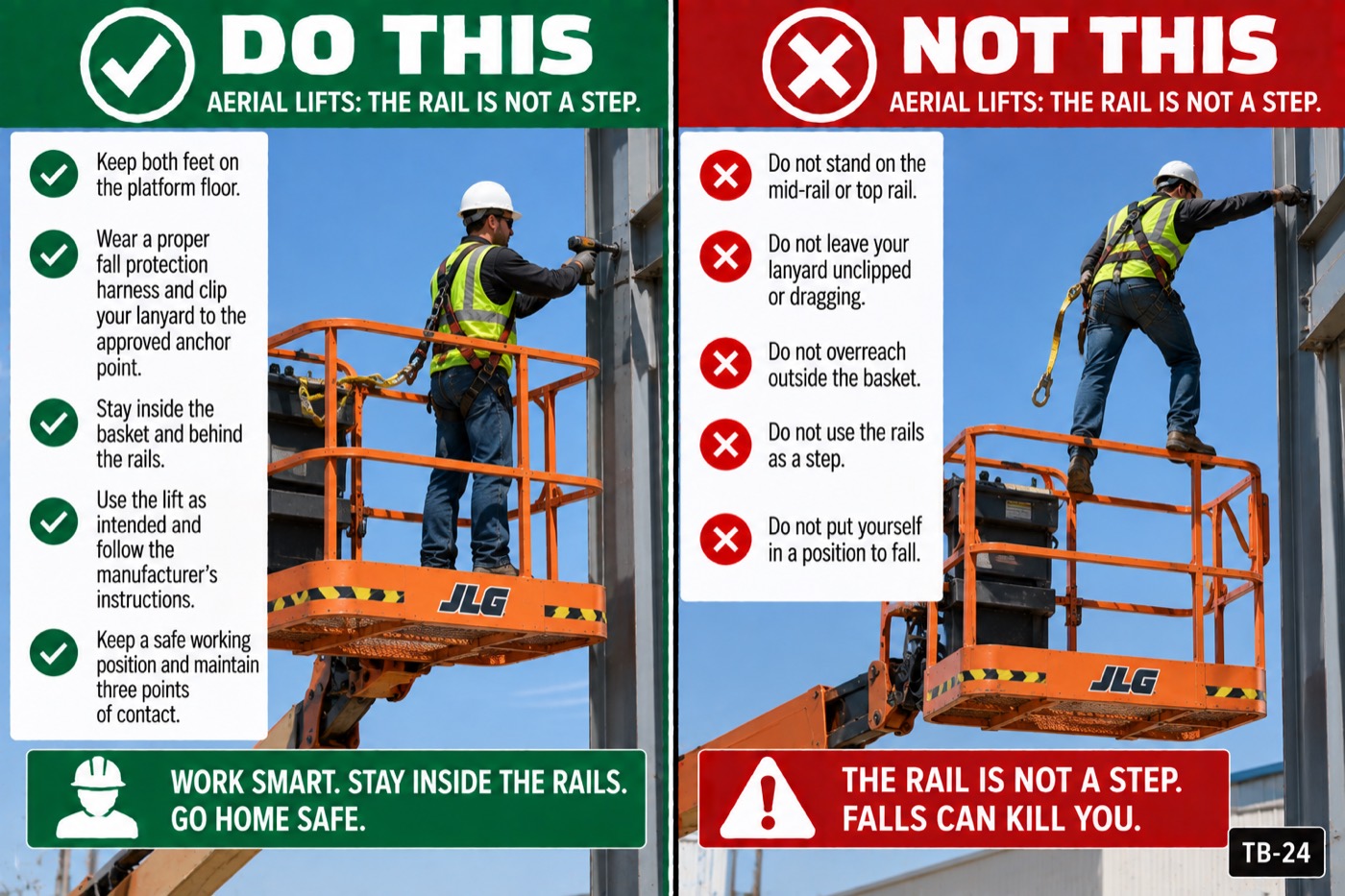
Everyone who has run a boom has been eighteen inches short of something. That is the moment this talk is about.
The points
- Stand on the platform floor. Every year someone climbs the rail for eighteen more inches of reach and falls thirty feet.
- In a boom lift, wear a harness with the lanyard clipped to the manufacturer's anchor point inside the basket - never to the structure you are working on.
- A scissor lift is different: the guardrails are the fall protection. Keep them up and the chain across the gate.
- Check the ground before you move. Soft fill, a trench edge, or a slope past the machine's rating will put it over.
- Never travel a boom lift with the platform raised unless the machine is rated to do it.
Why it goes wrong
Almost nobody falls from a lift because the lift failed. They fall because they left the platform floor - standing on the mid-rail, on a bucket, on the toeboard - to reach something just out of range. The machine is still doing its job. The person is simply no longer inside the thing that was protecting them.
The second pattern is the anchor. Clipping to the building rather than the basket feels safer, because the building is solid. It is not: if the lift moves or tips, the lanyard becomes the thing that pulls you out of the basket. The manufacturer put an anchor inside the basket for that reason.
The third is ground conditions. A lift is rated for a slope and a surface. Fresh backfill, a trench edge that has been rained on, a plate that is not seated - the machine has no way of knowing, and by the time it tells you, it is going over.
Questions for the crew
- Where on this site are we going to be at the edge of our reach today?
- Has anyone been in a lift that started to tip, or felt it move? What was the ground like?
- If you are in the basket and the machine loses power, what do you do - and does anyone on the ground know how to lower you?
To close
Before you climb on today: harness, anchor in the basket, and look at what the wheels are sitting on.
To hold this talk with your crew
1
Read it aloud. Five minutes, before the work starts.
2
Ask the questions. A crew that talks is a crew that remembers.
3
Have them sign on their own phones, and the record is sealed.