Intrusion: the car comes through, then what you do
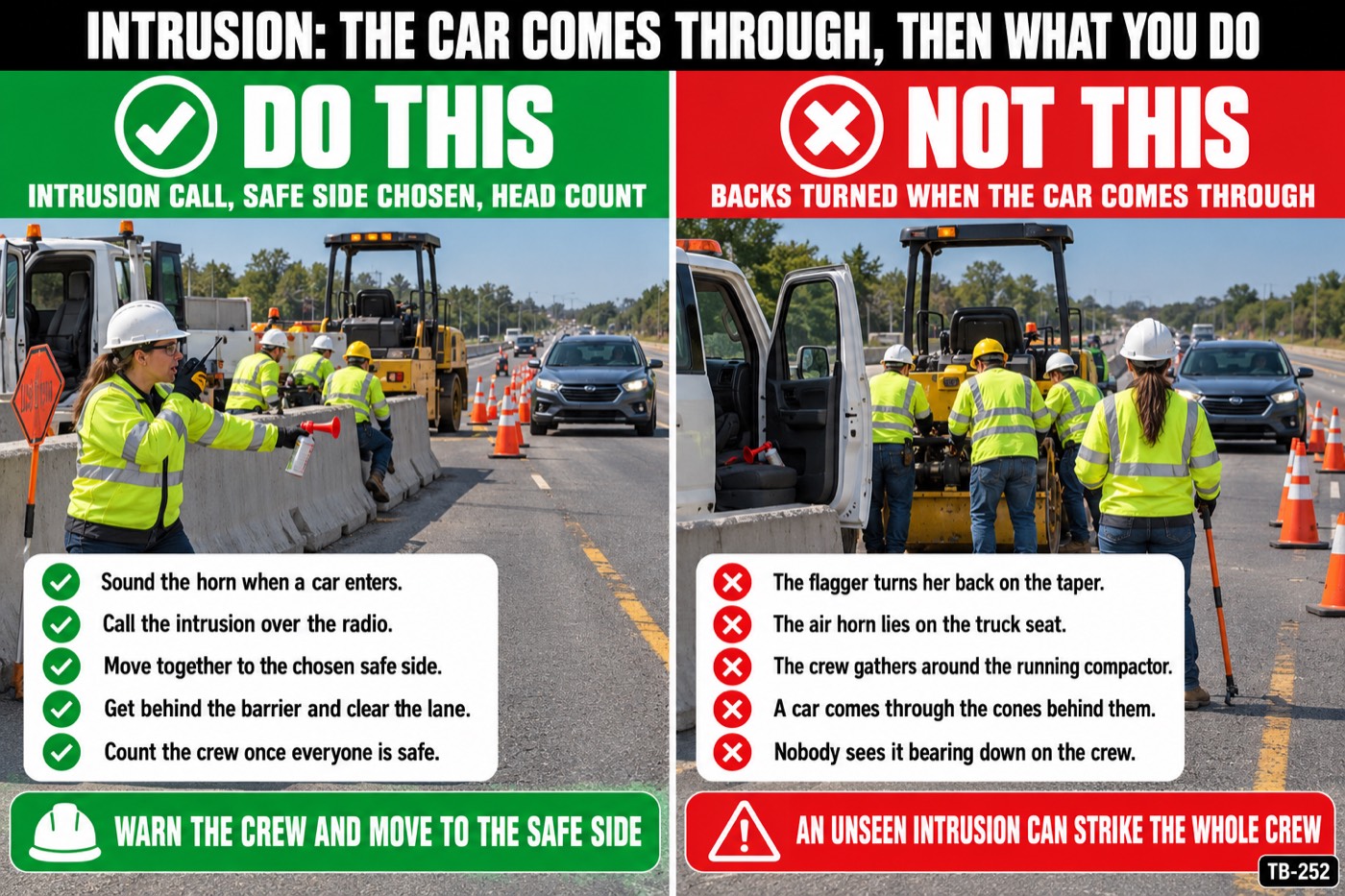
A cone weighs 7 pounds and a car weighs 4,000. When a driver comes through the taper, nothing on this job stops the car; the only thing that saves the crew is how fast they know it is coming.
The points
- The car that comes through the closure hits whoever did not know it was there. The crew with their backs turned and their ears full of the compactor are the ones on the ground.
- The alarm is the first job. Whoever sees it, the flagger, the TMA driver, the spotter, gives the intrusion call, three blasts on the air horn and the word on the radio, and the crew moves to their safe side without stopping to look.
- Every person on the crew has a place to go from where they are working, and it is not across the open lane. You decide the direction when you set up, not when the car is in the taper.
- After the car is through: head count first, then injuries, then 911 if anyone is hurt or the car stopped in the zone. Then the plate, the description and the direction, written down, and the closure reset before anyone goes back to work.
- Every intrusion gets logged, including the ones that missed: time, location, what the driver did, what we did. Three near misses at the same taper is not luck, it is the taper telling you something.
Why it goes wrong
29 CFR 1926.20(b) puts the safety program on the employer, and the intrusion plan is the part of the traffic control plan that covers the moment the devices fail. MUTCD Part 6 treats worker safety inside the zone as its own subject, and lists intrusion alarms, shadow vehicles and a trained person watching traffic as the options. Cones and drums guide drivers; none of them stop a car, and about 900 people a year die in US work zone crashes, most of them in the vehicles.
The crew does not hear an intruding car. They have hearing protection in, the roller or the saw is running, and the car is coming from behind. So the alarm has to be louder than the machines and different from every other noise on the job: an air horn, three blasts, is heard over a compactor when a radio call is not. The radio word goes out at the same time, and on a big job a raised arm from the spotter is the third channel.
The safe side is fixed at setup for each position: behind the barrier, behind the TMA, to the outside shoulder. It is never across the open lane and never toward the machine that is still moving. When the alarm sounds, people move without looking first, because looking costs the second they had.
After the car: a head count by name, not a glance, and then injuries. 911 for anyone hurt or for a car that has stopped inside the zone. Nobody chases the car and nobody goes to confront a driver who stopped. The closure is rebuilt, every cone back in its place, before a single person goes back to the work, because the next driver follows the same gap.
The log is what turns one scare into a change. Date, time, exact location in the zone, direction, a speed estimate, vehicle, plate, what the driver was doing, whether police were called and what we changed. Three entries at the same taper mean the taper is too short, the sign is in the wrong place or the speed is wrong, and that is a conversation with the owner, not another lucky week.
The common mistakes: no agreed signal, so the first person to see the car shouts and nobody knows what it means; the crew at the far end never told; the taper left broken while work continues; the flagger who had the closest call kept on the paddle when they are shaking; and the near miss that got talked about at lunch and never written down.
Questions for the crew
- What is the intrusion signal on this job today, and would the crew on the roller hear it over the machine?
- From where each of you will be standing at 10 a.m., which way do you move and what is in the way?
- When did we last have a car come through here, and did it get written down?
To close
Before the first cone goes down every person on this crew names the intrusion call and their safe side, and any car through the taper gets logged today, not remembered next week.
To hold this talk with your crew
1
Read it aloud. Five minutes, before the work starts.
2
Ask the questions. A crew that talks is a crew that remembers.
3
Have them sign on their own phones, and the record is sealed.