Attendance: within 25 feet and eyes on the hose
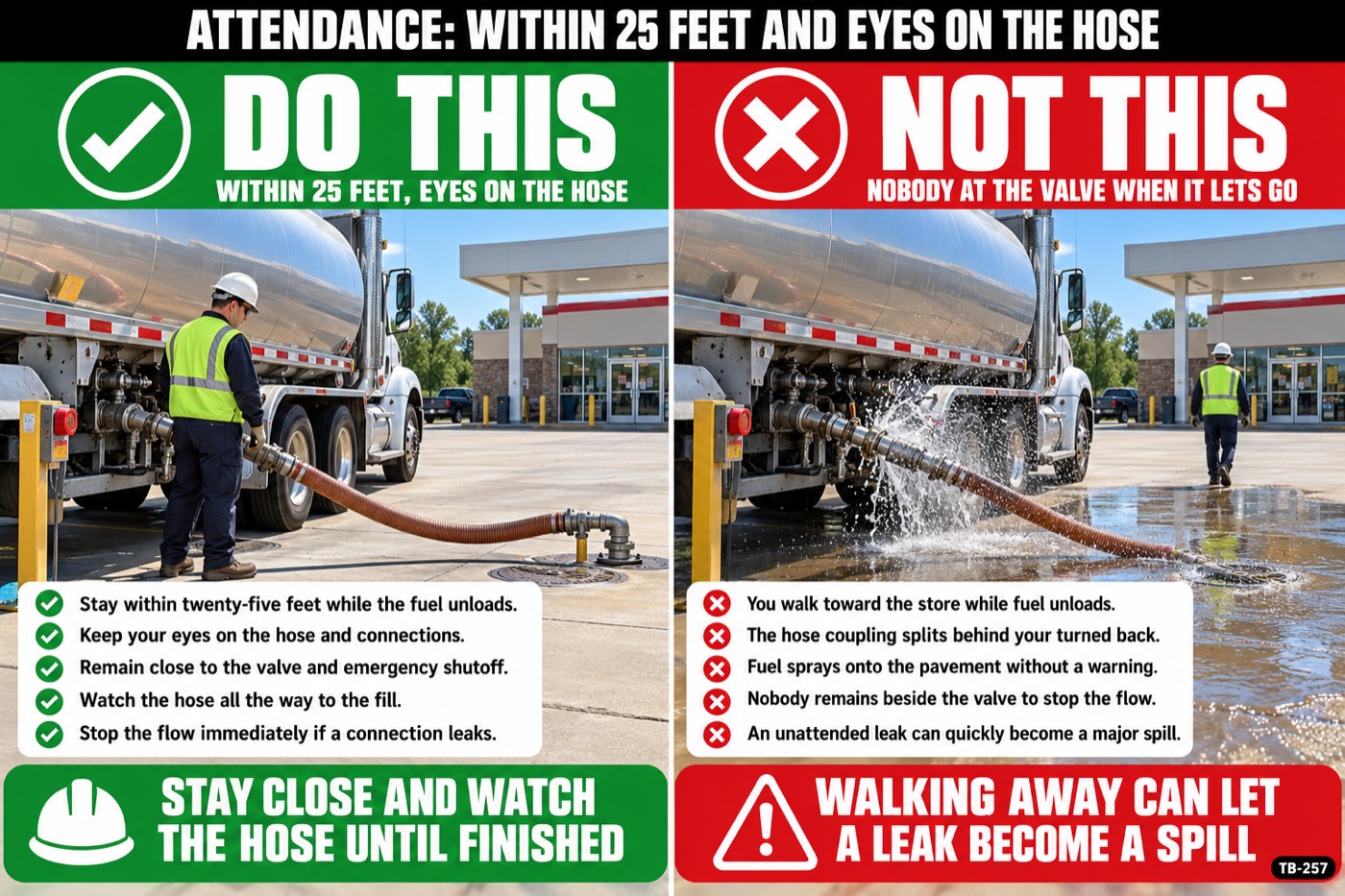
A delivery hose at full flow can move well over a hundred gallons a minute. Walk inside for a signature and the overfill can cover the lot by the time you come back out.
The points
- A cargo tank being unloaded is attended by a qualified person the whole time. Attended means within 25 feet of the tank, alert, with an unobstructed view of the tank and the delivery hose as far as practicable.
- Qualified means you know what the product is, you know the emergency steps, and you are authorized to move the truck and have the means to do it. A helper who cannot drive the rig away does not count.
- For diesel shipped as a combustible liquid, the rule lets you stay within 150 feet of the tank and 25 feet of the hose, and you look at both the tank and the receiving container at least every five minutes.
- The signature, the ticket and the phone call wait until the valves are closed and the hose is drained. If the customer wants to talk, they come out to you at the truck.
- Before the drop, know where the emergency shutoff is and that it works. Standing by the hose means little if your hand cannot reach the stop in a few seconds.
Why it goes wrong
177.834(i) puts the attendance duty on the person loading and on the motor carrier for unloading. A cargo tank must be attended by a qualified person at all times while it is loaded or unloaded. The carrier's duty during unloading only ends once its transport job is done, the tank has been placed on the customer's premises, and the tractor has been unhooked and taken off the premises. If the rig is still there, someone qualified is watching it.
The 25-foot distance is the number people remember. The rule also says the person attending an unload must be alert and have an unobstructed view of the cargo tank and the delivery hose to the maximum extent practicable. Sitting in the cab scrolling a phone does not meet alert. Standing on the far side of the trailer where the hose is out of sight does not meet unobstructed view, even at 20 feet.
The rule's idea of qualified is narrow and practical. You have been made aware of the hazardous material you are unloading, you have been told what to do in an emergency, and you are authorized to move the cargo tank and have the means to do it. That last part matters when a fire starts at the fill and the right move is to close the valves and pull the truck away from it. The keys in the office do not help.
Diesel shipped as a combustible liquid falls under 177.837(d) instead. The person attending stays within 150 feet of the cargo tank and 25 feet of the delivery hose, and looks at both the cargo tank and the receiving container at least once every five minutes when the unload takes longer than five minutes. That fits a long hose run to a farm tank or a job-site tank. It is not permission to sit in the shop.
The rule allows other ways to attend: cameras or sensors watched from a control station with remote shutoff valves, or hoses with valves at both ends that stop the flow within one second if the hose ruptures, plus a physical check at least every 60 minutes. Those are engineered systems at terminals and plants. On a delivery truck at a farm tank or a job-site tank, the system is you.
The usual failure is not a ruptured hose. It is the driver who walks in to find the manager, gets talked into a coffee, and comes back to fuel running out the vent. The tank was supposed to take 1,000 gallons and had room for 400, because someone else filled it yesterday. A person standing at the hose hears the vent whistle change and closes the valve. A person inside hears about it afterward.
Questions for the crew
- Where will you stand at each stop today so you can see both the tank and the hose?
- Who on this crew is qualified and has the keys to move the truck if something goes wrong at the fill?
- Which stops today have a long hose run, and how will you keep eyes on both ends?
To close
Today nobody leaves the hose for a signature; the paperwork waits until the valves are shut.
To hold this talk with your crew
1
Read it aloud. Five minutes, before the work starts.
2
Ask the questions. A crew that talks is a crew that remembers.
3
Have them sign on their own phones, and the record is sealed.