Fuel on your skin, in your eyes and in your lungs
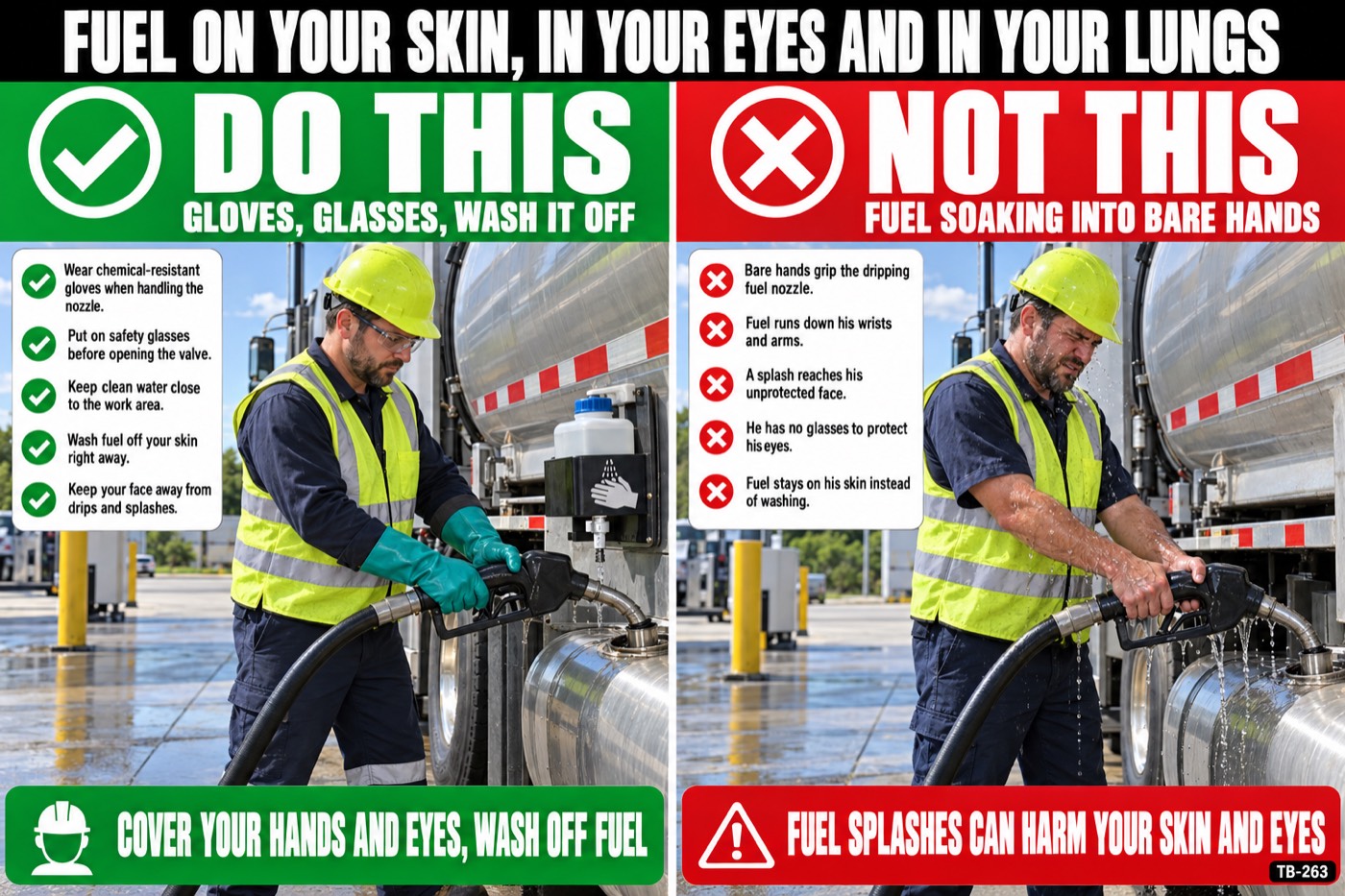
Diesel feels like water on your hands, so people wash parts in it and wipe their hands on their jeans. A few weeks of that and the skin cracks, and gasoline brings benzene along with it.
The points
- Gasoline contains benzene, which causes leukemia. The safety data sheet for each fuel you handle lists it, along with the health hazards, first aid and the gloves that hold up. Read it before you need it.
- Nitrile gloves keep fuel off your hands; thin latex breaks down in it. Fuel-soaked clothes come off and get washed separately, and nobody washes their hands in gasoline or diesel.
- Fuel in the eye gets flushed right away with clean running water, for as long as the SDS says, and contact lenses come out. Know where the eyewash bottle or water jug is on the truck before the splash.
- Stand upwind of the vent and the fill, and do not put your face over an open dome or a can to check the level. Headache, dizziness or nausea means you are breathing too much vapor.
- If fuel is swallowed - siphoning by mouth is the usual way - do not make the person vomit. Fuel pulled into the lungs causes a chemical pneumonia. Call for help and follow the SDS.
Why it goes wrong
29 CFR 1910.1200 is the hazard communication rule. Your employer keeps a safety data sheet for each hazardous chemical you work with and makes it readily accessible during each shift. When work moves between locations, the SDS can stay at the main facility as long as you can get the information immediately in an emergency. You are trained on the hazards when you start and whenever a new chemical hazard comes into your work.
Gasoline contains a small percentage of benzene. OSHA's benzene rule sets an exposure limit of 1 ppm over eight hours and 5 ppm over any 15 minutes, but it carves out most fuel handling after the bulk terminal, except indoor dispensing for more than four hours a day. That does not make benzene safe at the vent. It means hazard communication, the SDS and your own habits are what protect you most days.
Fuel strips the natural oils out of skin. Repeated contact causes dry, cracked, red skin that lets other things in, and long-term contact with some petroleum products has been linked to skin cancer. Diesel left soaking in a sleeve or a glove against the skin can cause a chemical burn. Fuel-soaked clothing is also a fire hazard on your body until it is off and washed.
Gasoline and diesel both sting and can injure the surface of the eye. Splashes happen when a coupler is broken under pressure, when a hose is lifted to drain, or when a nozzle kicks. Safety glasses keep most of it out; goggles keep more. If it gets in, flush with clean running water right away and keep flushing for the time on the SDS, with the eyelids held open, and get it checked.
Vapor is heavier than air and collects in low spots: tank pits, basements, culverts, sumps. At high levels it causes dizziness, headache and confusion, and it can push oxygen out of a confined space. Swallowed fuel is worse than it sounds. Because it is thin and slick it slides into the lungs easily, and a small amount there causes a serious chemical pneumonia. That is why the SDS says not to induce vomiting.
The habits are plain. Gloves on before the hose comes off the reel. Wash hands with soap and water before you eat, smoke or use the restroom. Keep a change of clothes on the truck. Do not carry fuel-soaked rags in a pocket or toss them in the cab. Use a pump or a squeeze siphon, never your mouth. And if a product on today's truck is new to you, read its SDS before the first drop.
Questions for the crew
- Where is the SDS for each product we handle today, and can you get to it from the truck?
- Do you have nitrile gloves, eye protection and clean water for your eyes on board right now?
- At which stop today will you work near a pit, basement or other low spot where vapor collects?
To close
Today gloves go on before the hose comes off the reel, and nobody puts their face over an open fill.
To hold this talk with your crew
1
Read it aloud. Five minutes, before the work starts.
2
Ask the questions. A crew that talks is a crew that remembers.
3
Have them sign on their own phones, and the record is sealed.