Fuel tank entry: the permit, the entrant, the attendant, the supervisor
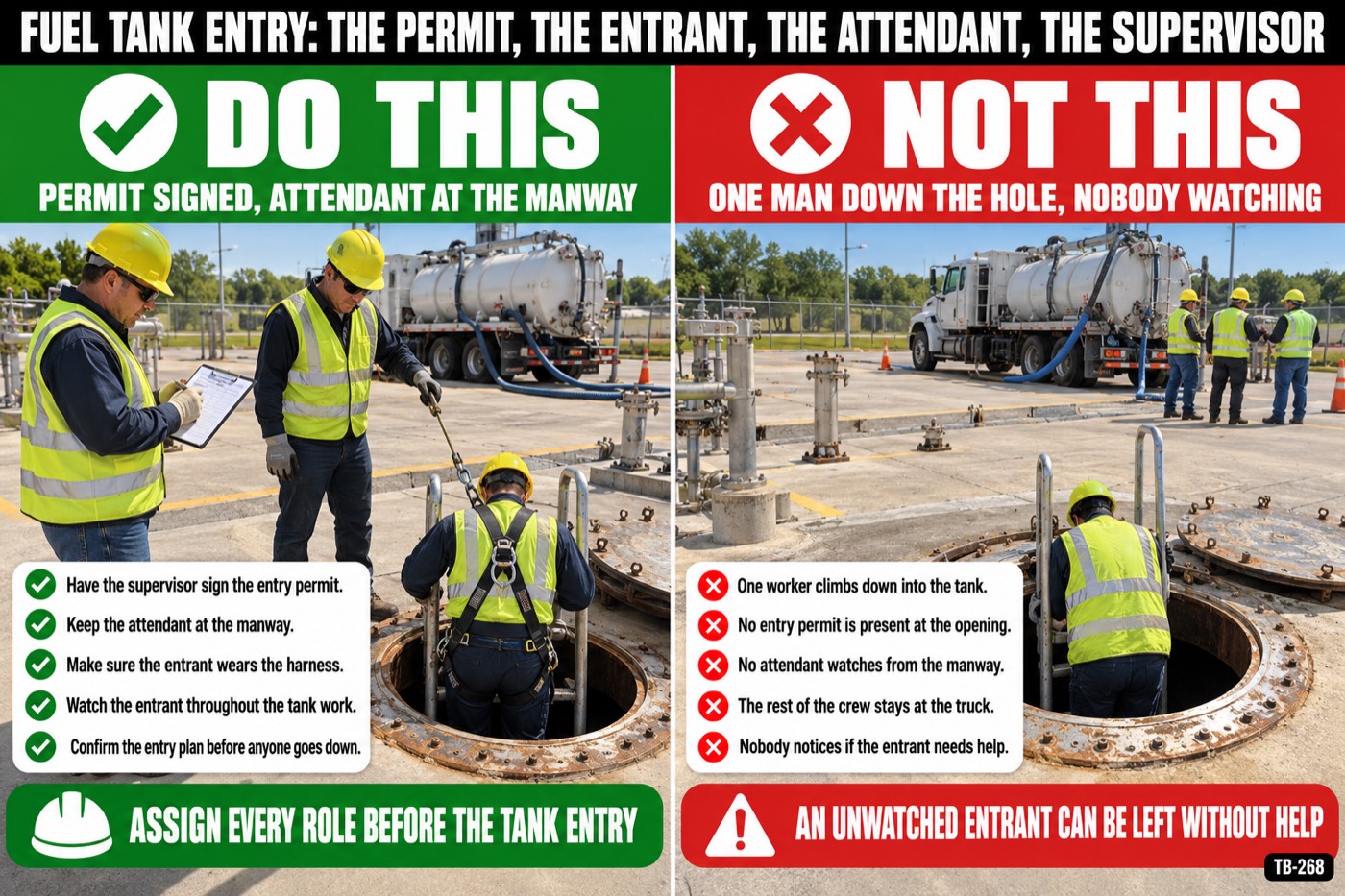
The product is gone, the tank is quiet, and the manway is open in the sun. Inside, the sludge on the floor is still giving off fuel vapor, and the steel has been eating the oxygen for months.
The points
- A tank that held fuel can hold vapor, sludge that keeps giving off vapor, and air with too little oxygen, behind one small opening. That is a permit-required confined space, and entry starts the moment any part of your body breaks the plane of the manway.
- The permit names the tank, the job, the date and time limit, the entrants, the attendant and the supervisor. It lists the hazards, how the tank is isolated, the acceptable air readings, the test results with who tested and when, and how to call rescue.
- The entrant knows the hazards and the signs of exposure, keeps talking to the attendant, and comes out on a warning sign, an alarm or an order to leave. Nobody inside argues with an evacuation call.
- The attendant stays outside for the whole entry until relieved by another attendant, keeps an accurate count of who is in, watches the meter and the people, and calls rescue. The attendant does not go in after anyone.
- The entry supervisor checks the permit is complete and true before signing it, and ends the entry when the job is done or conditions change. A permit lasts no longer than the task it was written for.
Why it goes wrong
A fuel tank looks harmless once the product is pumped out. It is not. Sludge, scale and rust in the bottom are soaked with fuel and keep releasing vapor for days. A steel tank that has been sealed can also lose oxygen as the inside rusts. The manway is often one narrow opening, sometimes at the bottom of a pit, and a person who passes out inside cannot be carried out through it by hand. Every one of those facts is why the rule treats it as a permit space.
The permit is a checklist that forces each question to be answered before anyone goes in, not paperwork to fill out after. Under 1910.146 it must show the space, the purpose, the date and the authorized duration, the names of the entrants, the attendant and the entry supervisor, the hazards, the isolation, the acceptable entry conditions, the test results with the tester's initials and time, the rescue service and how to reach it, and the equipment needed.
The entrant has three jobs: know the hazards, use the equipment the way it was set up, and stay in contact. That means knowing how benzene, low oxygen and fuel vapor show up in your own body - headache, dizziness, a sweet or fuel taste, feeling drunk - and saying so out loud. If the meter alarms, the attendant calls you out, or you feel wrong, you leave first and explain later. Coming out early never costs anyone their life.
The attendant is the most important person on the job and the one most tempted to leave. The attendant stays outside the tank the entire time until another attendant takes over, keeps the count of who is inside, watches the readings and the entrants, keeps unauthorized people away, and orders everyone out if something changes. When someone goes down, the attendant calls rescue and starts the retrieval line from outside. The attendant does not climb in.
The entry supervisor signs the permit only after checking that the tests were done, the isolation is in place, rescue can actually be reached, and the people named are the people present. The supervisor ends the entry when the work is finished or a prohibited condition shows up, and cancels the permit. The rule allows the permit to last only as long as the task. A new day, a new crew or a new set of conditions means a new look.
Canceled permits are kept for at least a year, and any problem during the entry gets written on the permit so the program gets fixed. Your crew already runs permits on the debris tank of the vac truck. A customer's fuel tank is the same program with worse air, an older and dirtier space, and often a busy gas station around it. Do not let the familiar truck make the unfamiliar tank feel routine.
Questions for the crew
- Who is the entrant, who is the attendant and who is the entry supervisor on this tank today?
- What readings does today's permit list as acceptable, and who took the last ones?
- What on this site would make us stop the entry and cancel the permit?
To close
Today nobody breaks the plane of that manway until the permit is filled in, signed, and the attendant is in place outside.
To hold this talk with your crew
1
Read it aloud. Five minutes, before the work starts.
2
Ask the questions. A crew that talks is a crew that remembers.
3
Have them sign on their own phones, and the record is sealed.