Hot work and the fire watch
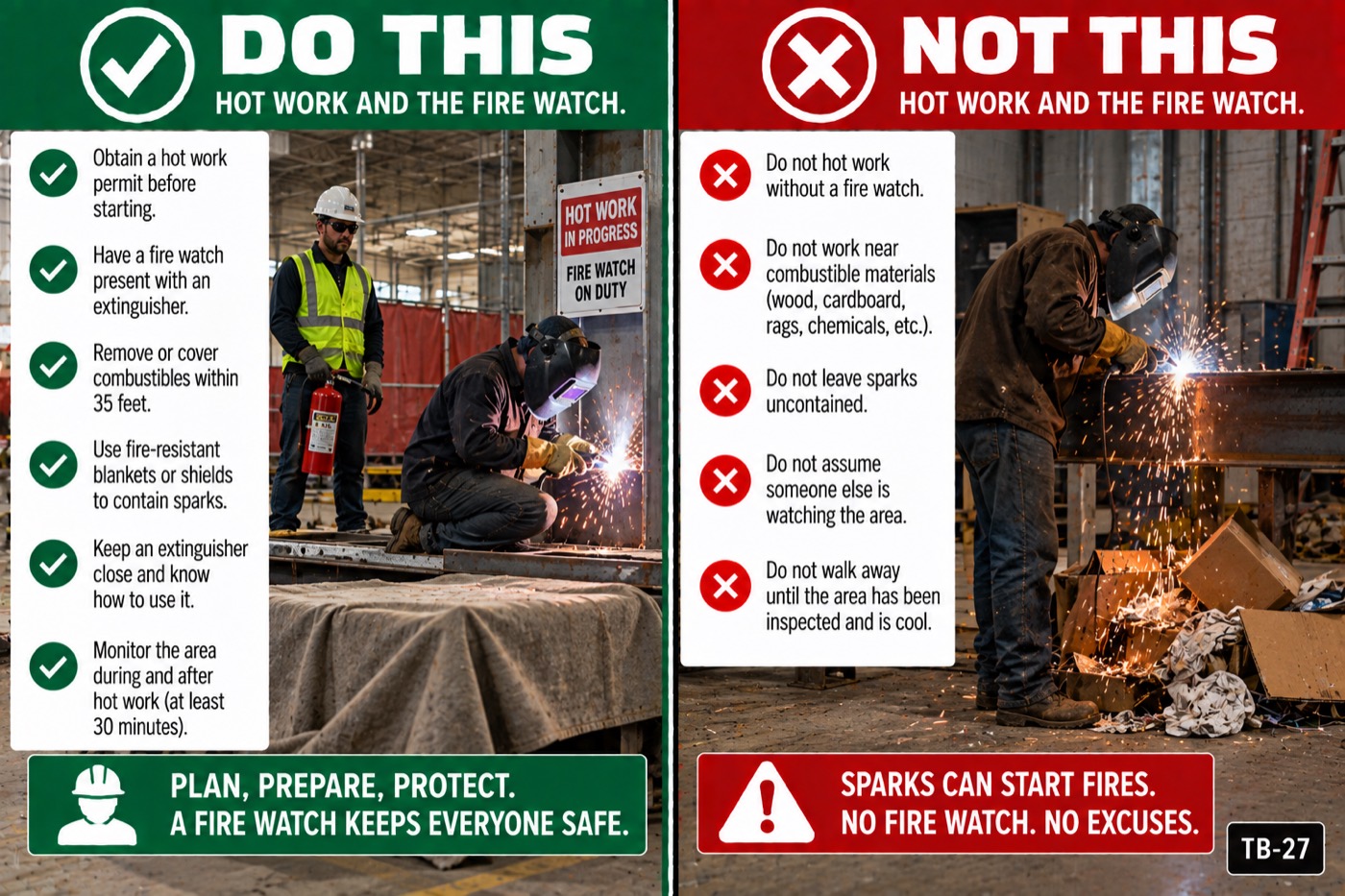
The fire almost never starts while you are watching. It starts twenty minutes after you pack up.
The points
- Move combustibles thirty-five feet away. What you cannot move gets covered with a fire-rated blanket, not a tarp.
- Sparks travel further than you expect, and they fall. Check the level below you before you strike an arc.
- The fire watch stays at least thirty minutes after the work stops, with an extinguisher in hand, watching for smoke rather than flame.
- Know where the extinguisher is and that it is charged before the first spark, not after.
- Cutting or welding on a drum, tank or pipe that held anything flammable is a different job with different rules. Do not guess at it.
Why it goes wrong
Sparks from cutting and grinding travel much further than people expect, and they fall. Thirty-five feet is the distance in OSHA's general industry welding rule and in NFPA 51B, and it is horizontal - the level below you is the one that gets missed, because nobody looks down before striking an arc.
What catches is rarely the obvious thing. It is sawdust in a floor joint, a rag someone left, insulation behind a wall cavity, or the underside of a tarp. Those smolder. That is why the fire watch is thirty minutes after the work stops and why the watch is looking for smoke rather than flame - by the time there is flame, the easy moment has passed.
Cutting or welding on a drum, tank or pipe that held anything flammable is a different job with different rules. Vapor left in a container is the thing that removes people from job sites permanently. If nobody can say for certain what was in it, the answer is that you do not cut it today.
Questions for the crew
- What is directly below where we will be cutting today?
- Who is on fire watch, and do they have an extinguisher that has been checked?
- Is there anything on this job we are being asked to cut that once held fuel or solvent?
To close
Whoever is on fire watch today stays the full thirty minutes after the last spark, with the extinguisher in hand.
To hold this talk with your crew
1
Read it aloud. Five minutes, before the work starts.
2
Ask the questions. A crew that talks is a crew that remembers.
3
Have them sign on their own phones, and the record is sealed.