Benzene in the sludge: the 1 ppm limit and your skin
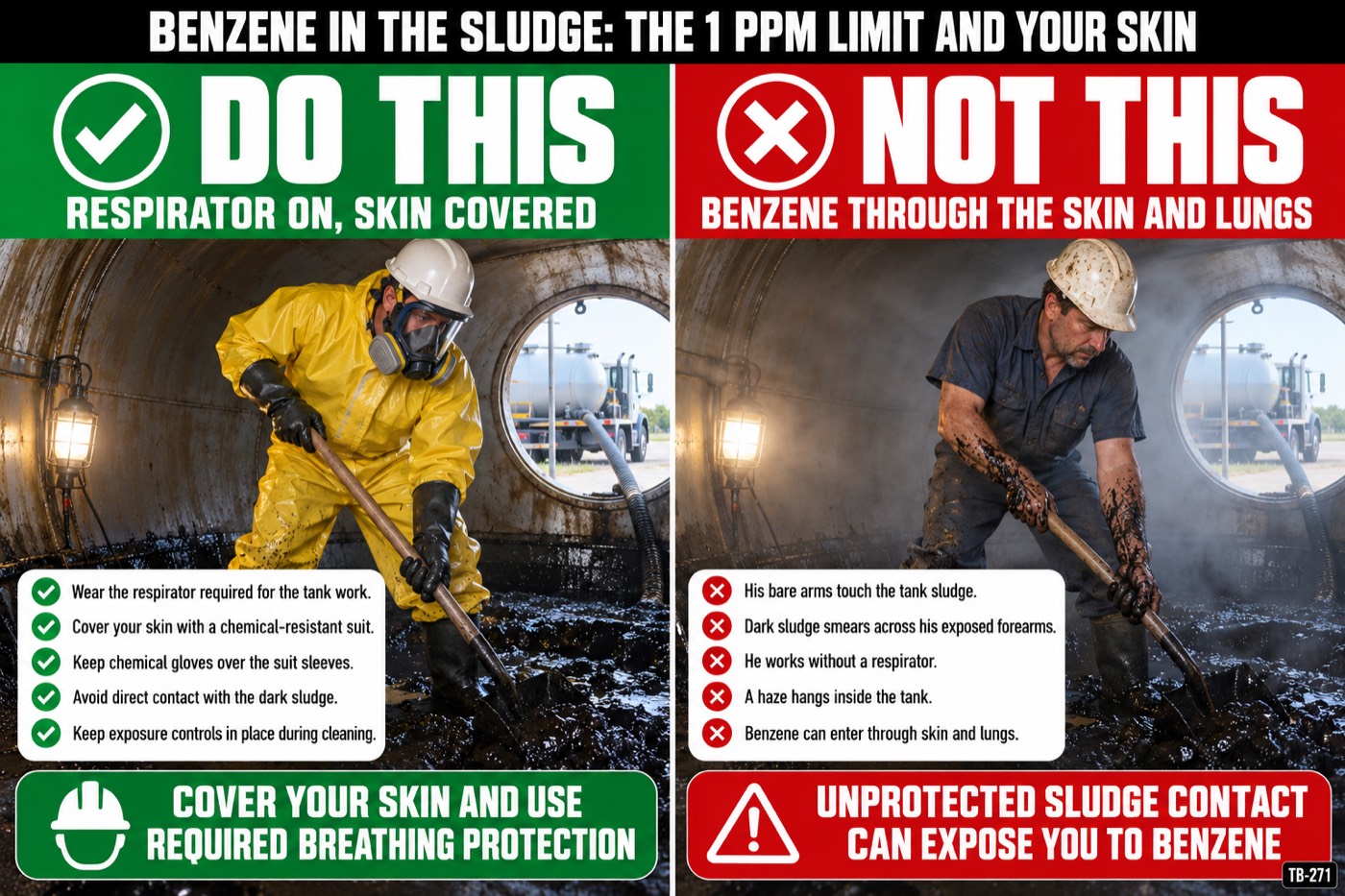
The sludge in the bottom of a gasoline tank looks like black pudding and smells like a gas station. The benzene coming off it has no smell you can count on, and the limit for a full day is one part per million.
The points
- Benzene is in gasoline, and it causes leukemia. The benzene rule sets a limit of 1 ppm averaged over 8 hours and 5 ppm over any 15 minutes, with an action level of 0.5 ppm. Those are tiny numbers that a nose cannot judge.
- The rule's scope leaves out most fuel handling after it leaves bulk wholesale storage, so at a retail station an older 10 ppm limit may be the one that applies on paper. Your blood does not read the scope. Plan tank work to the 1 ppm limit.
- Disturbing sludge is when benzene comes off. A combustible reading near zero says nothing about benzene. Measure it with a PID or benzene tubes, and size the respirator to what the measurement shows.
- Liquid fuel goes through skin and through the wrong gloves. Wear chemical gloves rated for gasoline, a disposable suit or coated coveralls, and boots that stay out of the sludge line. Fuel-soaked cotton stays against your skin all day.
- Wash hands and face before you eat, drink, smoke or use the phone. Leave the suit and gloves on the job, bag them as waste, and do not take fuel-soaked clothes home in the cab or to the washer your family uses.
Why it goes wrong
Benzene is a natural part of gasoline and is also found in crude-based fuels and their sludge. Long-term exposure damages the bone marrow and causes leukemia. It does not warn you. Smelling gasoline does not tell you how much benzene you are breathing, and the smell fades the longer you are in it. The only way to know your exposure is to measure it, and the only way to keep it low is to control the vapor and the contact.
The OSHA benzene rule, 1910.1028, with an identical construction version at 1926.1128, sets the permissible limit at 1 ppm as an 8-hour average and 5 ppm over any 15-minute period. The action level is 0.5 ppm. Employees at or above the action level on 30 or more days a year, or at or above the limits on 10 or more days, go into medical surveillance. These are the numbers to build a tank job around.
Be honest about the scope. The benzene rule does not cover the storage, distribution, dispensing or use of gasoline and other fuels after they leave bulk wholesale storage, except long indoor dispensing. For those exempt operations OSHA's older table sets 10 ppm as an 8-hour average. Whether your tank job falls inside or outside is a question for your safety lead. Either way, plan to 1 ppm, because the leukemia risk follows the dose, not the paperwork.
The sludge is the source. Pumping liquid out of a tank releases some vapor; breaking up and vacuuming the bottom sludge releases much more, and it happens with your face closest to it. A four-gas meter's combustible sensor cannot see benzene at these levels. Use a photoionization detector for total vapor and benzene-specific tubes or a badge to know the benzene share. If the numbers call for it, the respirator is chosen from those numbers, not from habit.
Benzene and gasoline also go through skin. Gasoline strips the oils from skin, cracks it and carries benzene in with it. Thin latex or cloth gloves do nothing. Pick gloves from the maker's chemical chart for gasoline and the solvents you are using, change them when they swell or soften, and do not tuck a fuel-soaked glove back into a pocket. The rule requires protective clothing and eye protection where needed to prevent eye contact and limit skin exposure to liquid benzene.
What leaves the tank with you matters. A wet sleeve against your wrist is an exposure all afternoon. Strip the outer layer at the edge of the work zone, bag it as waste, and wash hands and face before eating, drinking or smoking. Do not wear fuel-soaked boots into the truck cab, and do not wash fuel-soaked work clothes with the family laundry. Report headaches, dizziness or rashes after tank days; they are early signs, not weakness.
Questions for the crew
- What are we using today to measure benzene, not just LEL, and who reads it?
- What gloves and suit are we wearing into this sludge, and where do they come off?
- Where is the wash water and soap set up, and do we wash before lunch?
To close
Today we measure benzene before and during the sludge work, wear gloves and suits rated for fuel, and wash before we eat.
To hold this talk with your crew
1
Read it aloud. Five minutes, before the work starts.
2
Ask the questions. A crew that talks is a crew that remembers.
3
Have them sign on their own phones, and the record is sealed.