Hot work on a tank that held fuel
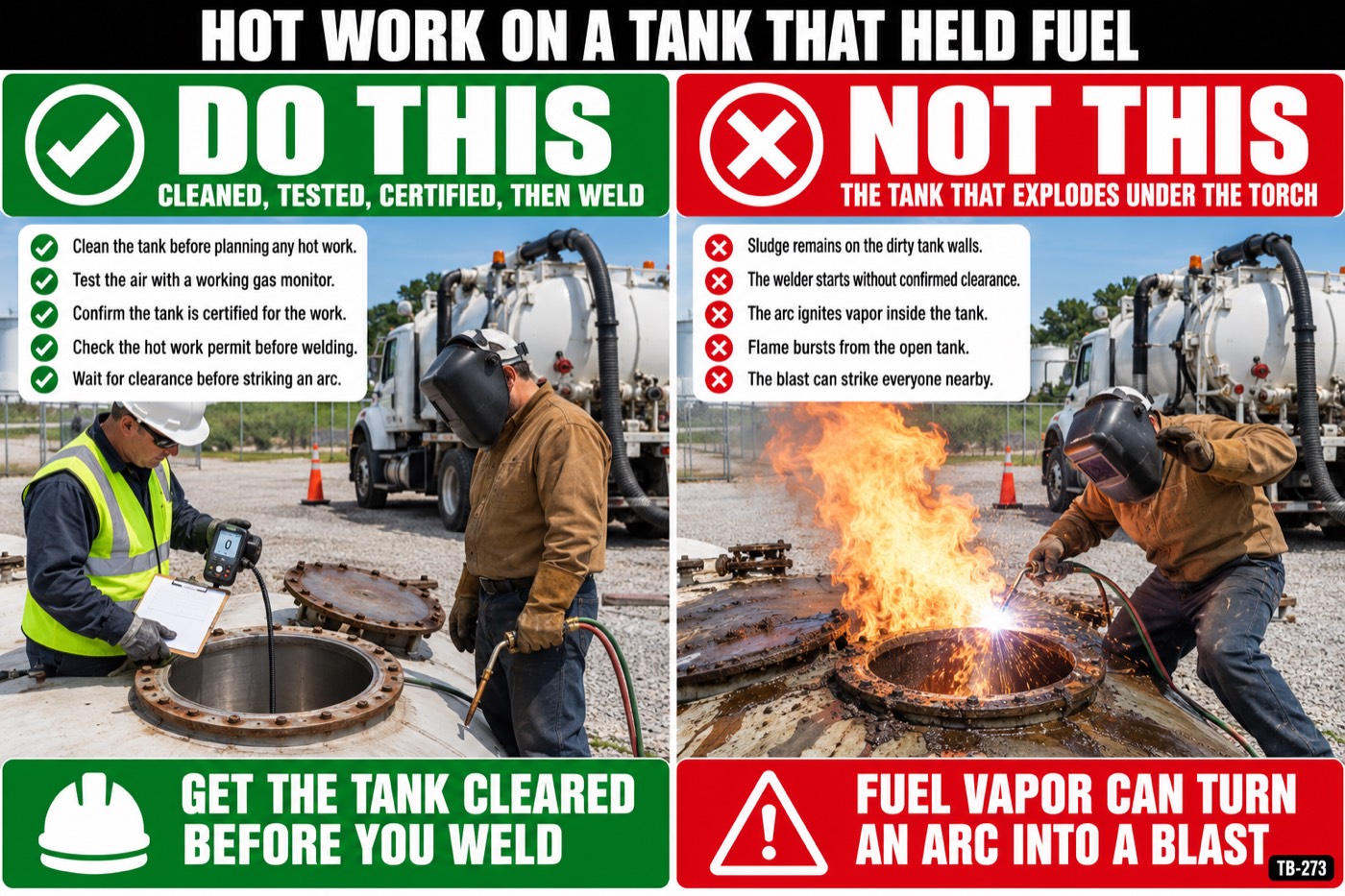
The tank was pumped last week and has been sitting open in the yard. A grinder touches the fill fitting to cut it off, and the heat pulls vapor out of the rust inside faster than the open hatch can let it out.
The points
- No welding, cutting or other hot work on a used tank until it has been cleaned so thoroughly that there is no flammable material left, and nothing that heat can turn into flammable or toxic vapor. That is what the rule says.
- Clean means the sludge, the scale and the residue in the seams are out, not just the liquid. Heat drives fuel out of rust and old coatings, so a tank that tested clean cold can make vapor the moment the torch touches it.
- Every pipe and connection to the tank is disconnected or blanked first, and the tank is vented so heat cannot build pressure inside. Inerting with nitrogen or dry ice is a recognized way to keep the inside from burning.
- Test right where the heat will go, inside and out, just before the work starts, and keep testing while it runs. Most crews will not strike an arc or start a grinder on a fuel tank above zero on the LEL screen.
- Hot work needs authorization from the person responsible, preferably in a written permit, a fire extinguisher at hand, and a fire watch who stays at least a half hour after the work stops. Cold cutting is often the better choice.
Why it goes wrong
Tanks that held fuel have killed welders who were sure they were empty. The pattern repeats: the liquid was gone, the tank had sat open for a while, someone put a torch or a grinder to a fitting, and the vapor still inside found the heat. 1910.252(a)(3) is short and blunt. No hot work on used drums, barrels, tanks or other containers until they are cleaned so thoroughly that no flammable materials remain, nor anything that heat could turn into flammable or toxic vapor.
Cleaning to that standard means more than pumping. The bottom sludge comes out, the walls are washed, and the scale and residue in the seams and around fittings are dealt with. Rust holds fuel like a sponge, and old coatings and fiberglass linings can give off vapor when heated. A tank that reads clean at morning air temperature can put out a fresh cloud when a cutting torch heats a patch of steel to hundreds of degrees.
The same paragraph requires every pipe line or connection to the tank to be disconnected or blanked, and all hollow spaces to be vented before heating, cutting or welding, so heat cannot build pressure. It also recommends purging with inert gas. Nitrogen or carbon dioxide from dry ice pushes oxygen out so the inside cannot burn. Remember the trade-off: an inerted tank is an oxygen-deficient atmosphere nobody can breathe, so inerted tanks are cut from outside only.
Test immediately before the work and keep testing during it. Put the sample hose inside the tank near where the heat will go, and check outside around the work, in the pit and at nearby vents. Many tank crews and good-practice guides from API and NFPA call for no measurable flammable vapor before hot work on a former fuel tank. If the reading moves, the heat stops. Write the readings and the time on the hot work permit.
The rule says that before cutting or welding the area is inspected by the person responsible for authorizing it, who sets the precautions, preferably in a written permit. Fire extinguishing equipment has to be ready for instant use. Where combustibles are within 35 feet, or other listed conditions exist, a fire watch is posted and stays at least a half hour after the work ends to catch smoldering fires. Around a fuel tank, plan on a fire watch every time.
Ask whether heat is needed at all. Air-powered saws, hydraulic shears and pipe cutters open a tank or cut a line without an open flame, and a tank can often be taken to a scrap processor whole instead of cut on site. Sparks from a grinder travel far and can drop into a vent pipe, an open spill bucket or a storm drain. If the plan says torch, the plan also says who tested, who authorized and who is watching.
Questions for the crew
- Is any heat needed on this tank today, or can it be cut cold?
- What did the meter read inside the tank at the spot we plan to cut, and how long ago?
- Who authorizes the hot work, and who is the fire watch for the half hour after?
To close
Today no torch, arc or grinder touches a tank that held fuel until it is cleaned, disconnected, tested at the cut, authorized in writing and watched.
To hold this talk with your crew
1
Read it aloud. Five minutes, before the work starts.
2
Ask the questions. A crew that talks is a crew that remembers.
3
Have them sign on their own phones, and the record is sealed.