Pulling a tank: the pit, the lift and the closure rules
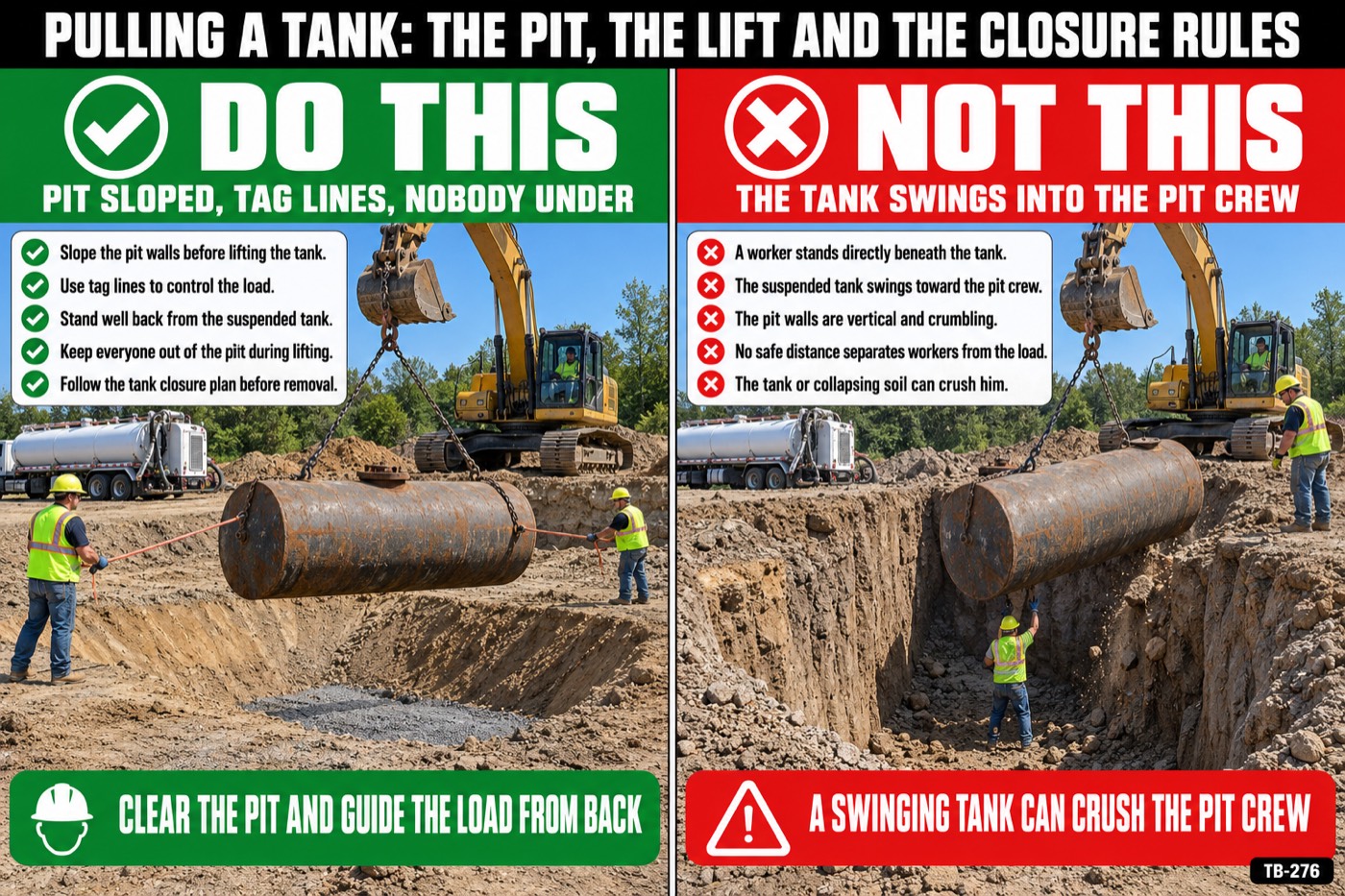
The excavator has the tank half out of the hole, swinging on two corroded lugs, and it is heavier than anyone thought because it is still a third full of water and sludge. Two people are standing in the pit to guide it.
The points
- Federal rules require the owner to notify the agency at least 30 days before permanent closure, then empty and clean the tank by removing all liquid and sludge, and then remove it, fill it with an inert solid, or close it in place as the agency approves.
- Before closure is finished, the site is checked for a release where contamination is most likely. If the crew finds stained soil, fuel in the pit water or strong vapor, that is reported, not backfilled.
- In Washington, the department gets notice 30 to 90 days ahead and a confirmation 3 business days before work, a certified service provider does or directly supervises the job, and the closure checklist goes in within 30 days.
- A tank pit is an excavation. Spoil and equipment stay at least 2 feet back from the edge, a competent person inspects it daily, and the air in the pit gets tested when fuel vapor could be present. Fuel-soaked soil makes vapor.
- Nobody stands under a tank being lifted or in the pit while it comes out. The tank is cleaned and vapor-freed or inerted before the lift, and tagged, plugged and secured for the trip to the scrap yard.
Why it goes wrong
Closing an underground storage tank is a regulated job with its own paperwork. Under 40 CFR 280.71, the owner notifies the implementing agency at least 30 days before beginning permanent closure. The tank is emptied and cleaned by removing all liquids and accumulated sludge. It is then removed from the ground, filled with an inert solid, or closed in place in a manner the agency approves. The crew does the work, but every step feeds the owner's closure file.
The federal rule at 280.72 requires that before closure is completed, the site is checked for a release where contamination is most likely, considering the stored product, the backfill, the depth to groundwater and the closure method. If contaminated soil, contaminated groundwater or free product is found, corrective action starts. For the crew that means you are the first eyes in the pit. Stained backfill, a sheen on pit water or a strong fuel smell gets photographed and reported, not buried.
States run their own programs. In Washington, WAC 173-360A-0810 requires notice to the Department of Ecology at least 30 but no more than 90 days before the start, and confirmation at least 3 business days before work. Decommissioning is done by or under the direct supervision of a certified service provider, a site assessment is done around the system being closed, and the provider's closure checklist is due within 30 days. Other states differ; check yours.
The tank pit is an excavation under OSHA's construction rules. A competent person inspects it and the protective system daily before work and after rain or anything that changes conditions. Spoil, the excavator and stacked material stay at least 2 feet from the edge. Pea gravel and sand backfill run like water. Where a hazardous atmosphere could exist, the air is tested before anyone enters a pit over 4 feet deep, and fuel-soaked soil is a reason to expect one.
The lift is where people get crushed. OSHA's excavation rule says no employee is under a load handled by lifting or digging equipment. Rig the tank to its lifting lugs, not around fittings, and use a tag line. Nobody is in the pit or between the tank and the machine while it comes up. An old tank can be heavier than expected with water and sludge left inside, and corroded lugs can tear. Check what is still in it before you hook it.
A tank coming out of the ground is still a fuel container until proven otherwise. Clean and vapor-free it, or inert it, before the lift, following good practice such as API RP 1604 on removal and disposal, which the note to the federal rule says may be used to comply. Plug or cap the openings, leave a small vent where the guidance calls for one, mark the tank with what it held, and chain it down for transport. Never leave an open tank in a yard where the public can reach it.
Questions for the crew
- Has the closure notice gone in for this tank, and who on site is the certified service provider?
- Who is the competent person for this pit today, and where are we testing the air?
- Who is in charge of the lift, and where is everyone standing while the tank comes out?
To close
Today the pit is inspected and tested, the tank is cleaned and vapor-freed before the lift, and nobody is in the hole or under the load while it comes out.
To hold this talk with your crew
1
Read it aloud. Five minutes, before the work starts.
2
Ask the questions. A crew that talks is a crew that remembers.
3
Have them sign on their own phones, and the record is sealed.