Arc flash is not a shock
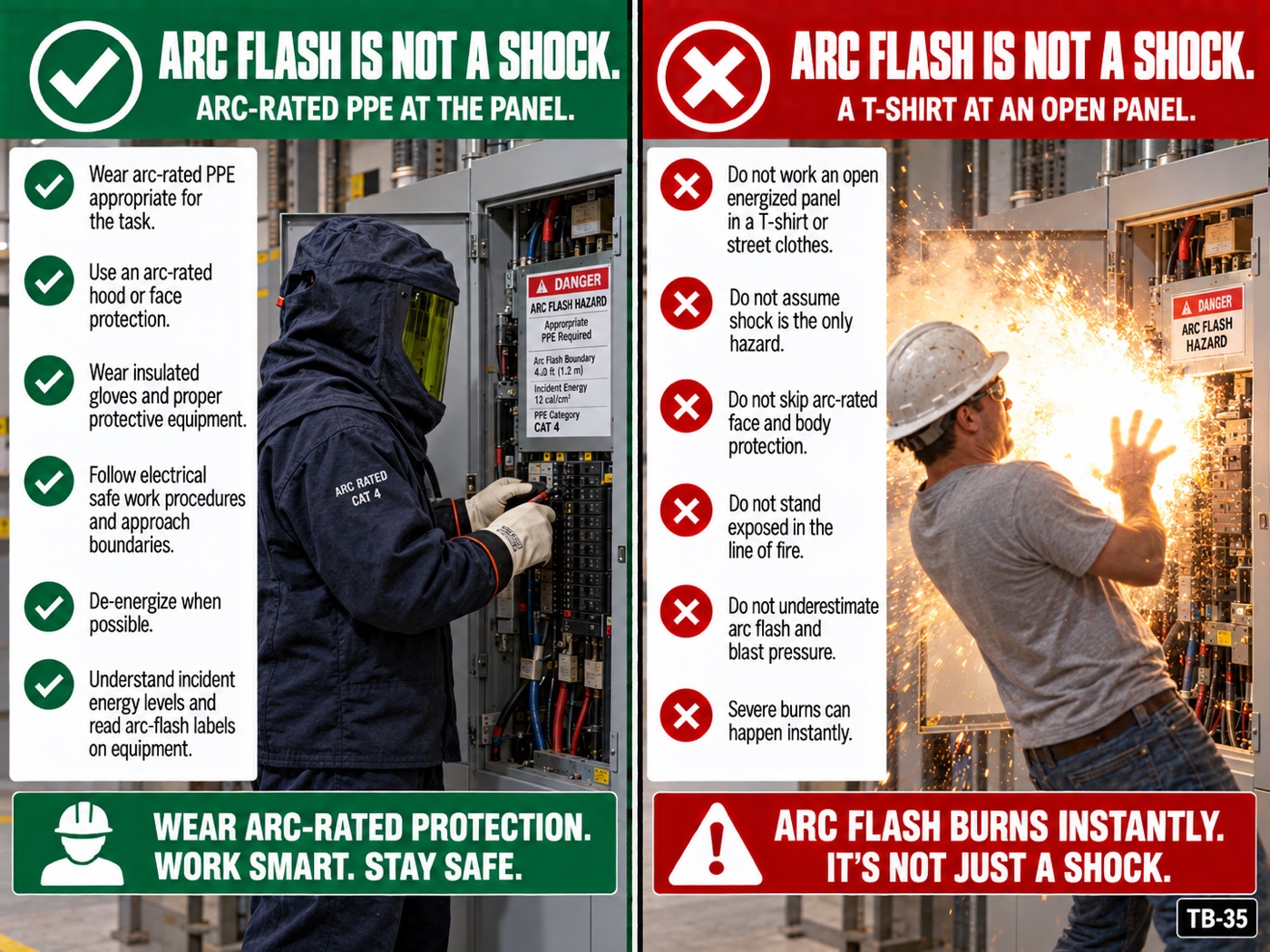
A shock hurts you where it goes in. An arc flash hurts everyone standing near the panel.
The points
- An arc flash is an explosion: thousands of degrees, molten metal, and a pressure wave that throws people across a room.
- Work it de-energized. 'It is quicker live' is the sentence that comes before most of these injuries.
- If it truly must be live, the approach boundary and the PPE come off the label on the equipment, not off memory.
- Cotton is not arc rated, and a synthetic shirt under a rated coverall melts into skin. Wear the rated layer next to you.
- Take off the watch, the ring and the chain. Metal on skin near an arc leaves a burn in the shape of the jewelry.
Why it goes wrong
An arc flash is a short circuit through the air. The arc itself reaches temperatures several times hotter than the surface of the sun, and it vaporizes copper instantly. Copper expands enormously when it turns to vapor, which is what produces the pressure wave - that is the part that throws people, blows doors off enclosures and ruptures eardrums.
So the injuries are not electrical injuries. They are burns from radiant heat and molten metal, blast trauma, hearing loss, and eye damage from the flash. Insulating gloves rated for shock do nothing about any of that.
This is why de-energizing is not the cautious option, it is the only reliable one. Almost every serious arc flash injury happens to someone working a live panel because shutting it down was inconvenient. The rules allow live work only in narrow cases, and the arc flash label on the equipment states the boundary and the PPE for that specific gear - those numbers vary panel to panel and are not something to carry in your head.
Clothing matters in a way that is not intuitive. Untreated cotton ignites and keeps burning. Polyester and nylon do worse: they melt and adhere to skin, so a synthetic t-shirt under a rated coverall causes the injury the coverall was bought to prevent. Metal jewelry conducts and holds heat, and leaves burns shaped like the ring or the chain.
Questions for the crew
- Is there any reason a panel has to be worked live today? What is it?
- What does the arc flash label on that gear actually say?
- What is everyone wearing under their outer layer right now?
To close
If anybody is opening a panel today, tell me now and we will talk about how it gets turned off first.
To hold this talk with your crew
1
Read it aloud. Five minutes, before the work starts.
2
Ask the questions. A crew that talks is a crew that remembers.
3
Have them sign on their own phones, and the record is sealed.