Pesticides: the label is the law
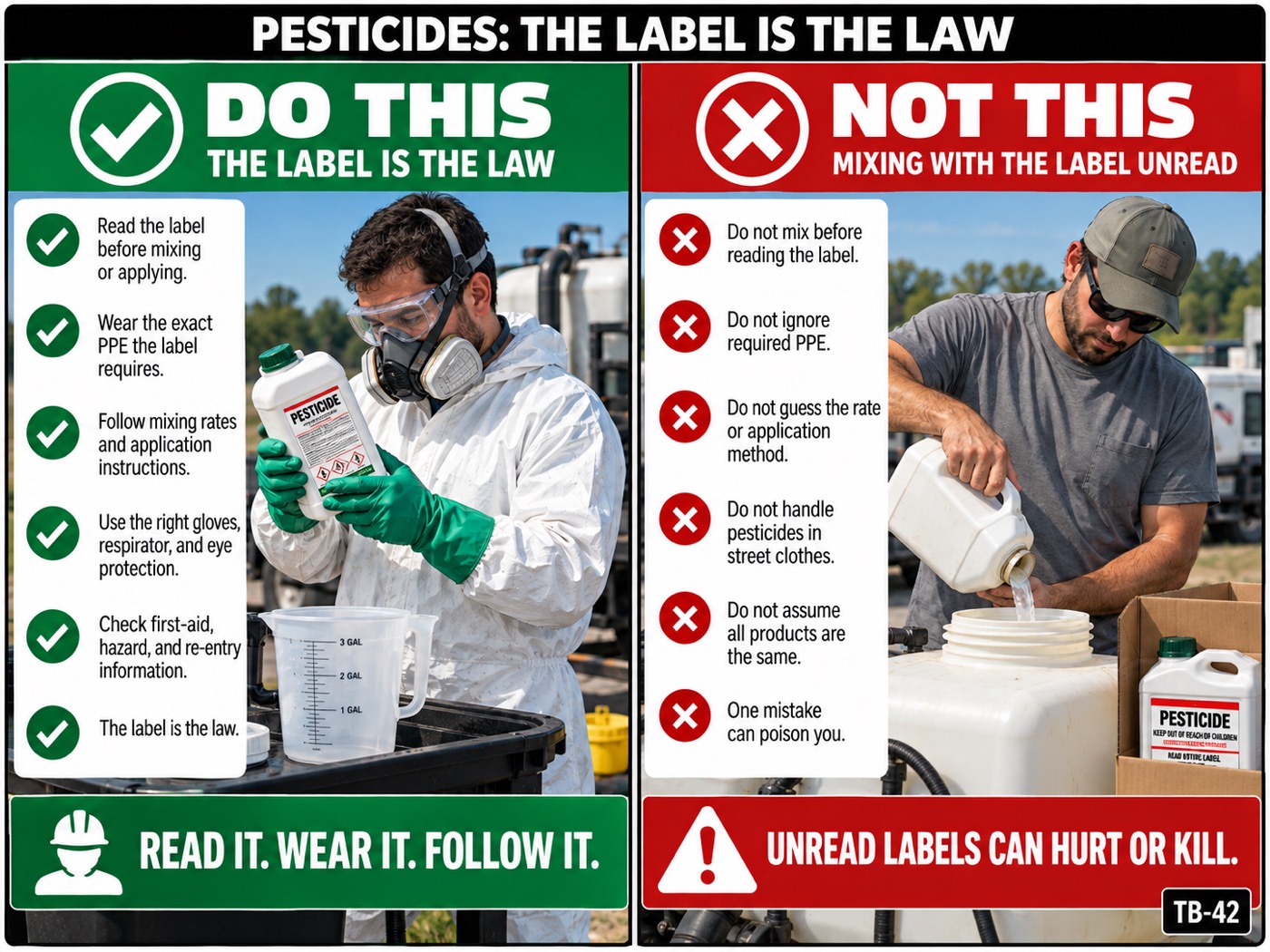
The label on that jug is not the manufacturer's advice. It is a legal document, and using the product against it is a violation.
The points
- The label is not advice, it is the law. Mixing rate, protective equipment and re-entry interval are all on it and all enforceable.
- The protective equipment named on the label is the minimum. Gloves and eye protection go on before you open the jug, not after you spill.
- Mix outdoors or in a ventilated area, and never where the hose can back-siphon into a water supply.
- Watch the wind. Drift onto a neighbor's yard, a vegetable garden or a playground is your problem and your liability.
- Wash before you eat, drink or smoke, and keep work clothes out of the family laundry.
Why it goes wrong
The mixing rate, the protective equipment, and the restricted-entry interval on a pesticide label are all enforceable. Doubling the rate because the weeds are bad is not being thorough; it is misuse, and it is the single most common thing that turns a routine application into a liability.
The protective equipment named on the label is a floor, not a suggestion, and the timing matters as much as the item. Concentrate in the jug is far more hazardous than the diluted mix in the tank, so gloves and eye protection go on before the lid comes off. Putting them on after a splash is the version everybody has done.
Back-siphoning is the failure people have never heard of. Filling a tank with a hose whose end sits below the water line means that if pressure drops in the main, the tank draws backward into the water supply. That is how a residential well or a building's potable line gets contaminated by a lawn application.
Drift is where the liability lives. The product does not stop at the property line, and a neighbor's vegetable garden, a school yard, a pond, or a beehive downwind is your problem and your name on it. Wind speed, nozzle choice and boom height all change how far it carries.
The exposure that adds up is the ordinary kind: eating with contaminated hands, a cigarette, work clothes going into the family wash with everything else.
Questions for the crew
- What are we applying today, and has everyone read that label?
- What is the re-entry interval, and who else will be on this property?
- Which way is the wind blowing, and what is downwind of us?
To close
Gloves and eye protection go on before the lid comes off. Every time, including the small jobs.
To hold this talk with your crew
1
Read it aloud. Five minutes, before the work starts.
2
Ask the questions. A crew that talks is a crew that remembers.
3
Have them sign on their own phones, and the record is sealed.