Locates: the paint marks are not the pipe
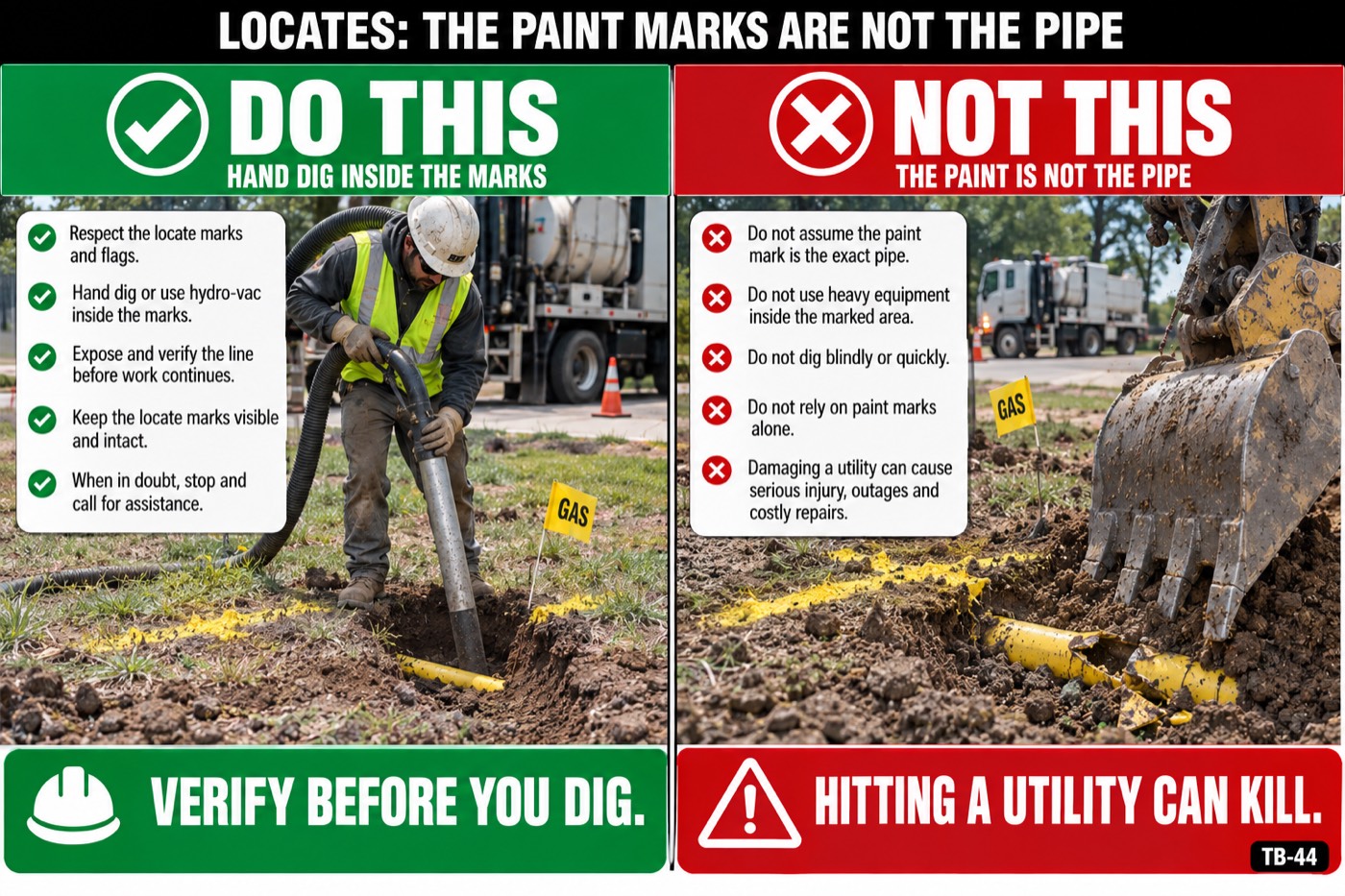
The paint on the ground is a guess with an 18-inch margin on either side. A bucket tooth or a wand that finds a 2-inch gas service inside that margin is what ends up on the news.
The points
- Hitting a gas service with a bucket or a wand does not just stop the job. Gas fills the hole, finds an ignition source, and the crew in the hole is standing in it.
- Nothing gets opened until the 811 ticket is in and the marks are down. The rule says you find the estimated location and contact the utility owners before you dig.
- The tolerance zone is the width of the utility plus the margin your state sets, usually 18 to 24 inches on each side of the mark. Inside that zone nothing mechanical touches the ground.
- Inside the zone you pothole by hand or with the vac truck until you can see the line and know its depth. Then you support it and dig around it.
- Marks expire. If the ticket is past its life, which is set by each state and is 45 days in Washington, or the paint is gone under mud or traffic, you call again before the next scoop.
Why it goes wrong
The rule at 29 CFR 1926.651 is short: find the estimated location of utility installations before you open the ground, contact the owners, and when the excavation gets near the line, determine the exact location by safe and acceptable means. Hand tools and vacuum excavation are the accepted means. A bucket working blind is not.
The paint marks the locator's best reading from the surface. The actual line can be a foot or two off, deeper or shallower than the ticket says, and services to houses were often never recorded at all. The tolerance zone is the admission that the mark is a guess.
Hydro-excavation inside the zone is safer than a shovel, but it is not harmless. A wand held still on a plastic gas service at 3,000 PSI will cut it, and a wand at the wrong angle has cut telecom, fiber and direct-buried electric. Keep the pressure down, keep the wand moving, and cut across the line, never along it or toward it.
Colors tell you what you are near. Red is electric, yellow is gas, oil or steam, orange is communications, blue is water, green is sewer, white is your proposed excavation. If the color you find in the ground does not match the ticket, stop. There is a line nobody knew about.
The common mistake is trusting an old ticket because the job dragged on, or trusting that the private side has been located when 811 only marks to the meter. Private lines, irrigation, lighting and the fuel line to the generator are yours to find.
If you do hit a gas line, get everyone out of the hole and upwind, shut off the truck, no phones or radios at the hole, and call the utility and 911 from a distance. Do not try to clamp it, kink it, or bury it back.
Questions for the crew
- What is the ticket number for this site, when was it called in, and when does it expire?
- Which marks are we working inside today, and how wide is the tolerance zone here?
- What is on the private side of the meter that 811 did not mark?
To close
No bucket goes inside the marked zone today; that ground gets opened by hand or with the vac until we can see the line.
To hold this talk with your crew
1
Read it aloud. Five minutes, before the work starts.
2
Ask the questions. A crew that talks is a crew that remembers.
3
Have them sign on their own phones, and the record is sealed.