Vacuum tube: suction takes a hand, the boom takes a head
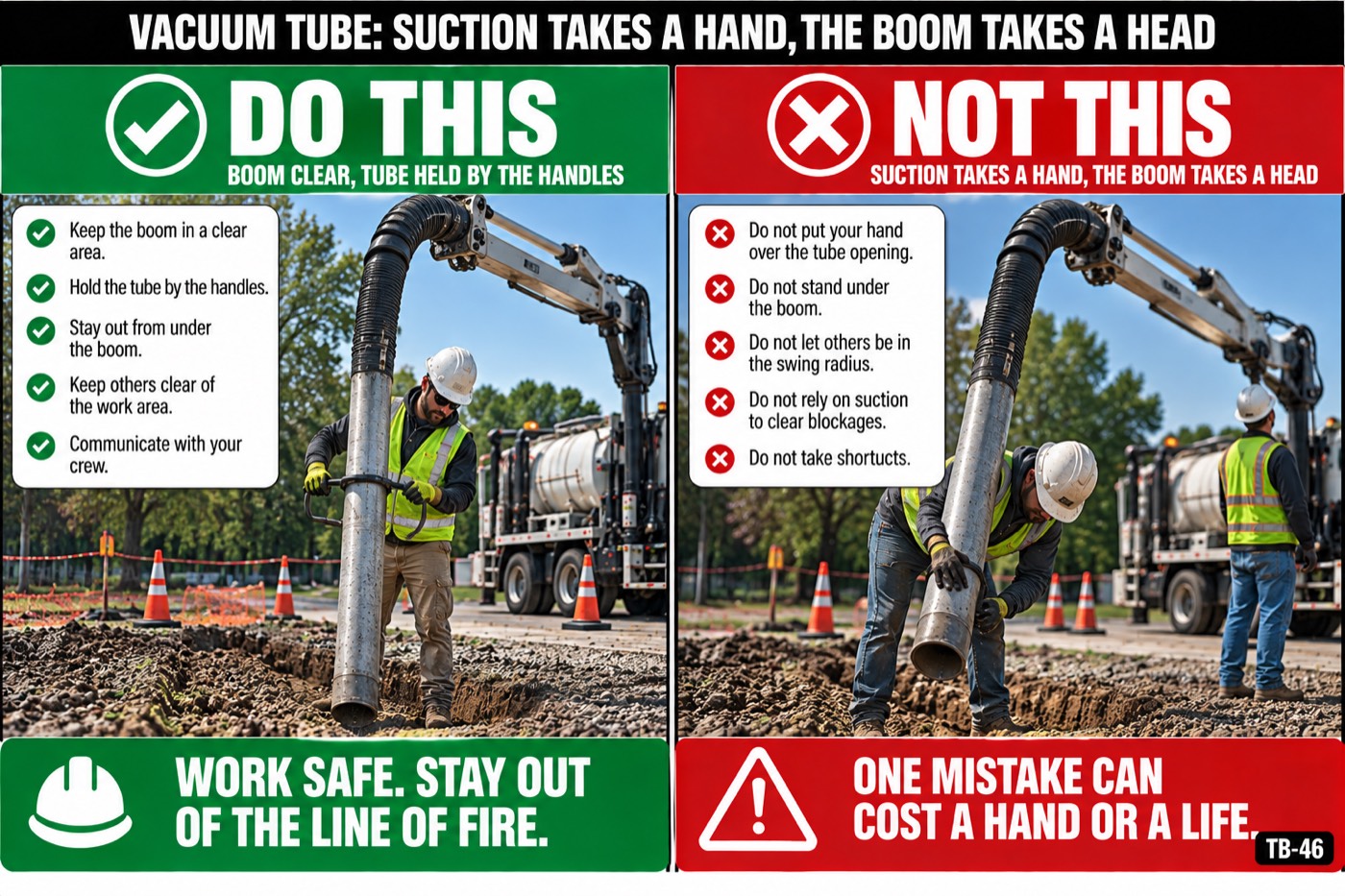
At 16 inches of vacuum, the open end of an 8-inch tube is pulling with about 400 pounds of force. It will take a glove, and it will take the hand inside it.
The points
- A hand over the open tube gets pulled in and held. A boom that drops or a tube section that swings hits the head, and there is no getting out from under either.
- Never put a hand, a foot or a tool over the tube inlet. Clear a blockage by shutting the vacuum off or opening the relief, never by reaching in.
- A 5-foot aluminum tube section weighs around 25 to 30 pounds empty and much more with slurry in it. Two people move a section, and nobody catches a dropped one.
- The boom is a crane. Nobody stands under it, and nobody works under a raised boom unless it is blocked or on its rest.
- The tube whips when it grabs and releases. Keep your head and body out of the arc, and keep the operator in sight of whoever is guiding the tube.
Why it goes wrong
Vacuum is measured in inches of mercury. 16 to 18 inches, a normal working range, is about 8 to 9 PSI below the air around you. On the 50 square inches of an 8-inch opening that is 400 pounds or more of force, more than a person can pull against. A hand on the inlet is trapped until someone kills the vacuum.
The tube hangs from the boom and the boom is hydraulic. A hose failure or a valve that sticks can let it drop, and the boom and tube together weigh hundreds of pounds before the slurry inside. 29 CFR 1926.20(b) puts regular equipment inspections and qualified operators on the employer, and the daily check of the boom is where that happens.
Whipping happens when the tube seals against something, the vacuum spikes, and then it breaks free. The tube jumps toward the release. Hold it with your body to the side, not in line, and keep your face away from the end. Stand where a sudden move of the tube cannot pin you against the truck, a wall or the trench box.
Slurry in the tube is heavy. A full 8-inch tube of slurry is about 2 to 3 pounds per inch of length. Sections come apart with slurry still in them when someone breaks a coupling before the tube has drained, and 40 pounds of mud and the tube end come down on whoever is holding the low end.
The common mistake is working the tube inlet in a hole, out of sight of the operator, with the vacuum controlled from the truck. The person on the tube needs a way to stop the vacuum now: a remote, a radio, or eye contact and a signal everyone agrees on before the first suck.
Keep the boom and tube 10 feet from overhead lines, further for anything above 50 kV. The boom reaches 20 feet or more and the person guiding the tube is looking down, not up.
Questions for the crew
- Who is running the vacuum today, and how does the person on the tube tell them to stop?
- Where is the boom going to swing on this site, and what is in that arc?
- Where are the overhead lines relative to where we are parking?
To close
Nobody reaches into a live tube today, and nobody is under the boom while it is up.
To hold this talk with your crew
1
Read it aloud. Five minutes, before the work starts.
2
Ask the questions. A crew that talks is a crew that remembers.
3
Have them sign on their own phones, and the record is sealed.