Hot water in winter: the scald and the frozen line
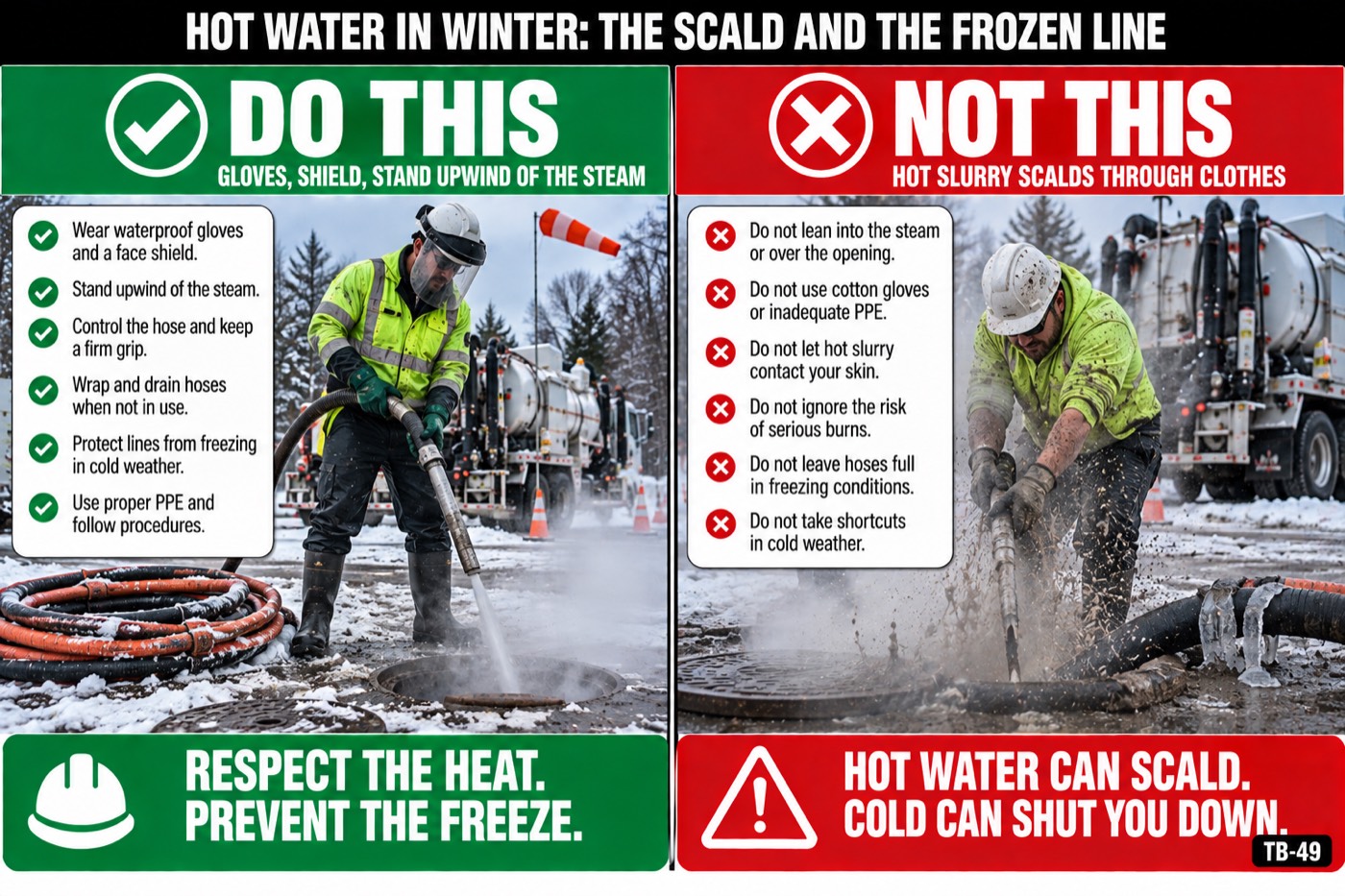
The boiler puts out water at 150 to 180 degrees. At 155 degrees skin gets a third-degree burn in about one second.
The points
- A hot-water wand hit is a scald and a pressure injury at the same time. Hot slurry splashed from the tube or the door burns through a wet glove before you can get it off.
- Boiler water at 150 to 180 degrees burns in seconds, 140 degrees in about 5 seconds, 120 degrees in a few minutes. Wet clothing keeps the heat on the skin.
- Steam from a hot hole, the tank vent, or a burst line can scald at close range, and the fog it makes hides where it is coming from. Face shield, hot-water gloves, and a rain suit that sheds water, not a sweatshirt that holds it.
- Frozen lines burst under pressure. Drain the water lines and pump at end of shift, blow them out, and never crank the pressure up on a line you have not confirmed is open.
- Slurry stays hot. The tube, the couplings and the tank door are hot to touch for an hour after the boiler is off, and hot mud sticks to skin.
Why it goes wrong
A scald burn is about temperature and time. At 120 degrees the skin is damaged in around 5 minutes, at 140 in around 5 seconds, at 155 in about 1 second. A hydro-excavation boiler runs 150 to 180 degrees to melt frozen ground, which is the range where the time is too short to react. 29 CFR 1926.95 puts protective equipment on the employer for hazards that injure through physical contact, and this is exactly that.
Water at 3,000 PSI and 160 degrees is two injuries at once: the injection and the cook. The injury looks like a scald on the surface and the damage underneath is deeper than a cold-water hit. Same rule: emergency room that hour, tell them the pressure and the temperature.
Wet clothing is the mechanism for most scalds. A splash of hot slurry on a cotton hoodie stays at temperature against the skin while the person is trying to get the hoodie off. Rain gear sheds it. If someone is hit, get the wet layer off and cool water on the skin for 10 to 20 minutes; do not use ice.
Frozen lines are why winter work has an extra check. Ice in a line or the pump blocks the flow, the pump deadheads, and the pressure goes to relief or to the weakest fitting. Look for frost on the outside of a line and for zero flow at the wand with the pump running. If there is no flow, the pump goes off, not the pressure up.
The common mistake is skipping gloves because the water is warm and it feels good on cold hands. Warm hands are not the problem. A slip of the wand at 160 degrees and 3,000 PSI is.
Steam is invisible in cold air until it condenses, and it condenses on your face. Vent the tank with everyone clear and upwind, and open a hot hole from the side.
Questions for the crew
- What temperature is the boiler set to today, and who checked the water lines for ice this morning?
- Where is the tank going to vent, and who is standing there?
- If someone gets hot slurry down their collar, where is the cool water and what comes off first?
To close
Today the person on the wand is in a face shield, hot-water gloves and rain gear, and the lines get drained before the truck sits in the cold.
To hold this talk with your crew
1
Read it aloud. Five minutes, before the work starts.
2
Ask the questions. A crew that talks is a crew that remembers.
3
Have them sign on their own phones, and the record is sealed.