The debris tank is a confined space, permit and all
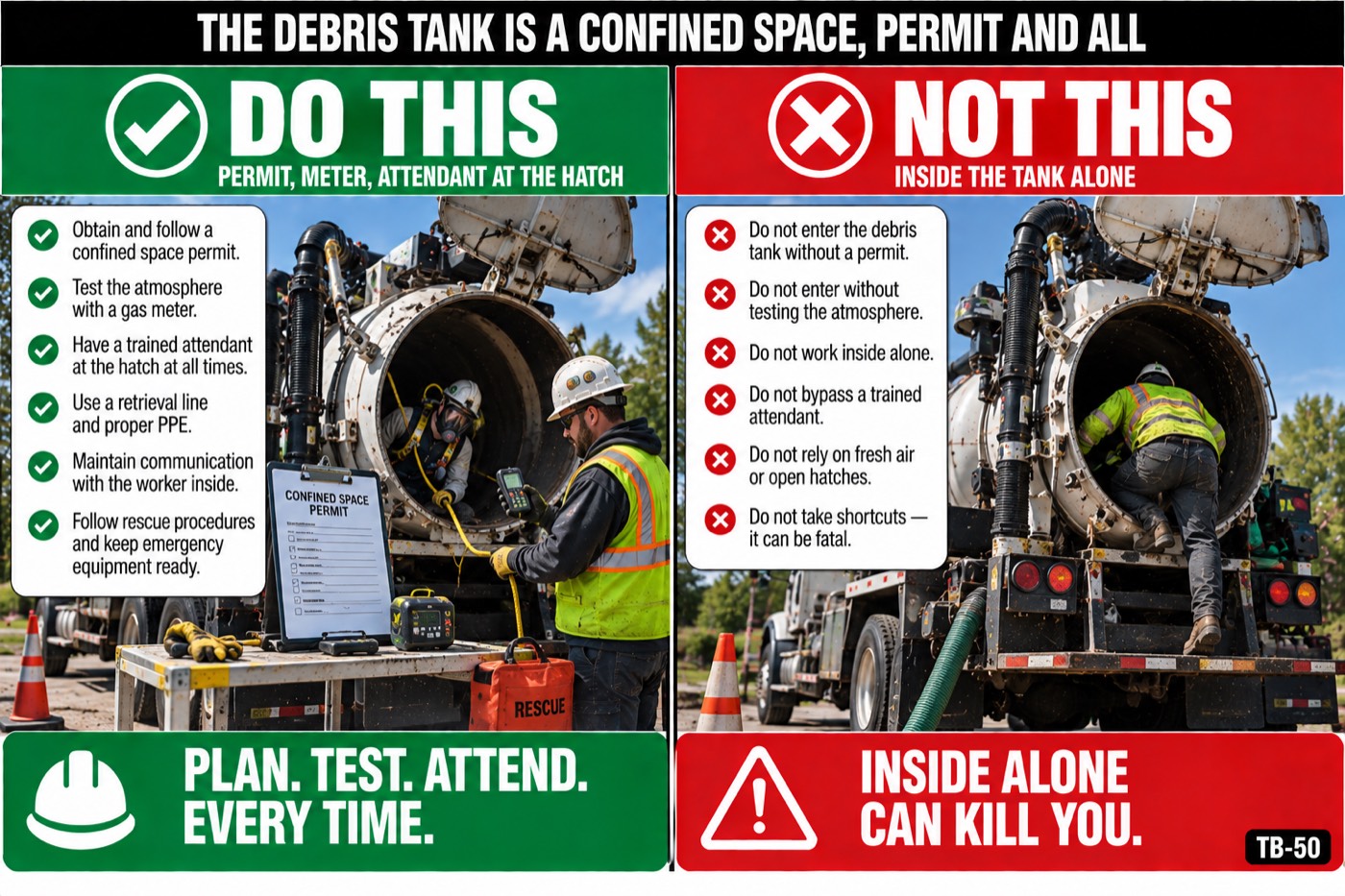
The inside of the debris tank has one way out, a floor of whatever you sucked up yesterday, and whatever that is off-gassing. That is a permit-required confined space by every part of the definition.
The points
- Someone goes in the tank to chip out dried mud or clear the baffles, the door swings or the gas builds, and the person outside cannot get them out. Most confined space deaths are would-be rescuers.
- The tank meets the definition: big enough to enter, limited way in and out, not built for people to be in. With sludge, sewer, fuel or anything that off-gasses, it is permit-required.
- No entry without the permit, the atmosphere tested, an attendant at the door the whole time, and a rescue plan that does not depend on 911 getting there first.
- Isolate the machine: PTO off, vacuum locked out, hydraulics locked out, door blocked open so it cannot swing. A tank that can pressurize or a door that can close is a trap.
- Most tank cleaning does not need entry. Water, the door open, and time do more than a person with a shovel inside.
Why it goes wrong
29 CFR 1926.1203 requires a competent person to identify every confined space on the job and decide which are permit spaces, and it requires the employer to keep people out of permit spaces they are not authorized to enter. The tank on the truck is on the list, and the answer for most crews is that it is a no-entry space.
The hazards stack. Sludge and sewer produce hydrogen sulfide; fuel or solvent residue produces flammable vapor; a tank that was steam-cleaned can be oxygen-poor or hot; slurry in a tank is an engulfment hazard when it lets go from a baffle. The atmosphere test is oxygen, flammables, hydrogen sulfide and carbon monoxide, before entry and continuous during it.
The door is the piece that makes a vac tank worse than a plain tank. It swings on hydraulics, it weighs a ton, and it is the only way out. It gets pinned or blocked open and the hydraulic system is locked out so no valve movement, hose failure or bump of a control can move it.
An attendant stays at the door, does nothing else, and has a way to call for rescue. Rescue means a retrieval line on the entrant if the geometry allows it, and people trained on the plan, or a rescue service that has been called ahead and has confirmed they can respond. Rescue does not mean the attendant goes in.
The common mistake is treating a quick job as not really entry. Leaning in through the door with head and shoulders inside, standing on the door sill to reach a baffle, or climbing in for 2 minutes are all entry. The gas does not know how long you planned to be in there.
Ask what is in the tank before deciding on entry. What got vacuumed last week is still in there, and the paperwork on that load is the atmosphere you are entering.
Questions for the crew
- What were the last three loads in this tank, and what does that mean for the air inside?
- If we had to clean the baffles today, who is the competent person deciding whether that is entry, and what is the permit?
- Who would be the attendant, and what would they do if the person inside stopped answering?
To close
Nobody puts head or shoulders inside the tank today; if it needs a person inside, it needs the permit, the tester, the attendant and the rescue plan first.
To hold this talk with your crew
1
Read it aloud. Five minutes, before the work starts.
2
Ask the questions. A crew that talks is a crew that remembers.
3
Have them sign on their own phones, and the record is sealed.