Drowsy driving: the 4 a.m. start and the microsleep
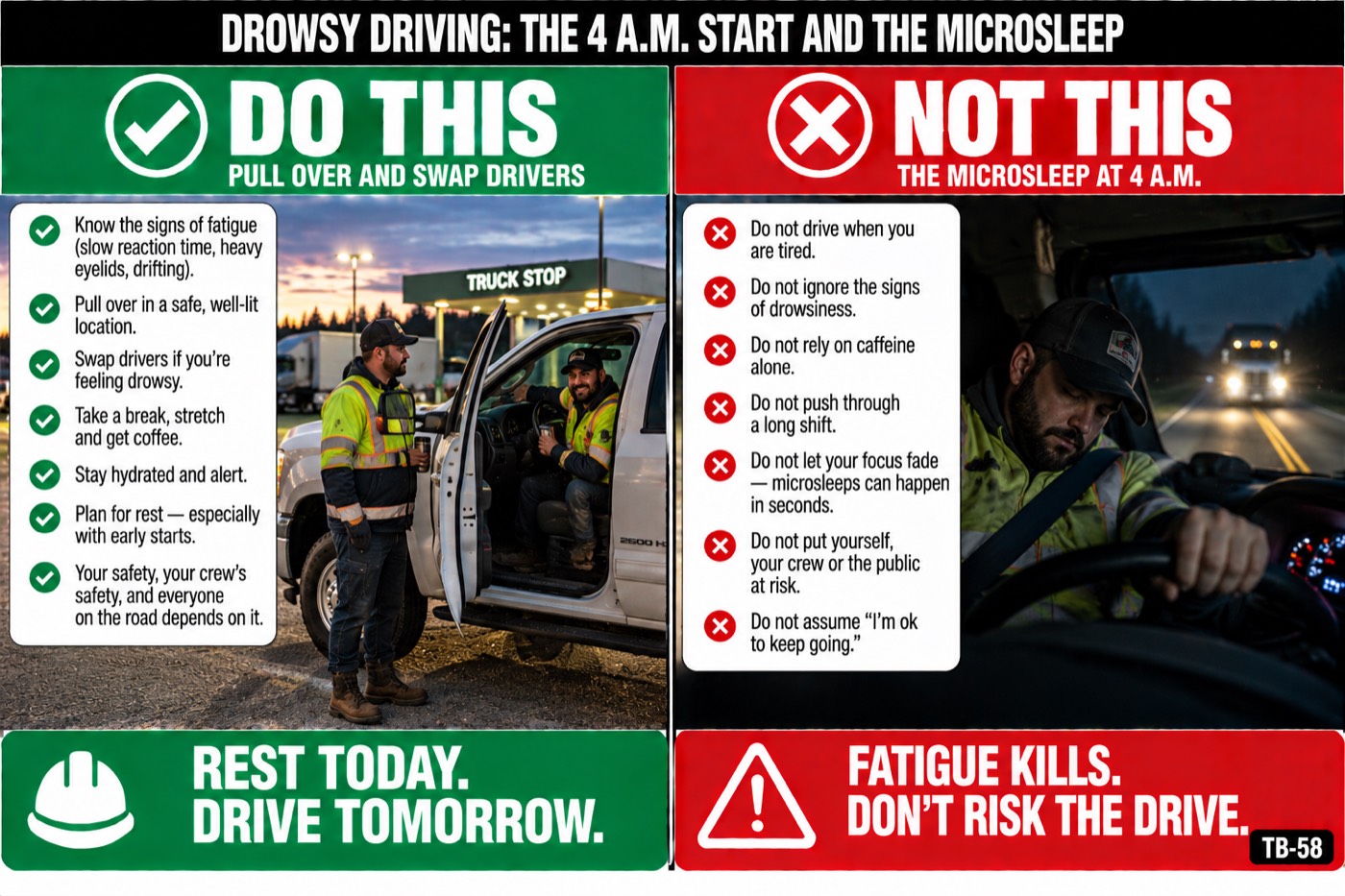
Eighteen hours awake makes you drive about like a person with a blood alcohol of 0.05. Twenty-four hours awake is about 0.10, over the legal limit in every state. Nobody gets pulled over for it.
The points
- A microsleep lasts three to five seconds and you do not know it happened. At 55 miles an hour that is 250 to 400 feet of road with nobody driving, which is the width of the lane and the ditch and the oak tree.
- The DOT rule says a driver whose alertness is impaired by fatigue does not operate a commercial motor vehicle, and the company does not require or permit it. That is the standard for every truck we run.
- A 4 a.m. start means a 2:30 alarm. If you went to bed at 11 that is three and a half hours, and by the end of a ten-hour shift you have been awake about 12 hours before the drive home, on three and a half hours of sleep.
- The drive home after a long shift is the dangerous one. Windows down, radio up and coffee do not fix it; the only thing that fixes a sleep debt is sleep, and a 20-minute nap in the truck before you leave the site is worth more than all three.
- If you catch yourself drifting over the line, missing an exit, or not remembering the last mile, you are already having microsleeps. Pull over. Call the foreman. Nobody here gets written up for being late because they slept in the truck.
Why it goes wrong
Fatigue works like alcohol on the brain: reaction time stretches, judgment gets optimistic, and the ability to notice that you are impaired goes first. That is why a drowsy driver will tell you he is fine. The 18-hours-awake equals 0.05 comparison comes from studies that put tired people and drunk people through the same driving tests.
Microsleeps are the mechanism. The brain shuts off for a few seconds with the eyes open or half open. Drowsy crashes are typically a single vehicle leaving the road at speed with no skid marks, because the driver never braked. They cluster between midnight and 6 a.m. and in the mid-afternoon dip, and the mid-afternoon dip is exactly when a crew that started at 4 is driving home.
The early start compounds it. The body does not sleep well before midnight on command, so the 2:30 alarm usually cuts a night to four or five hours. Two or three of those nights in a row builds a sleep debt that a weekend does not fully repay. A crew on a two-week early-start push is driving impaired by the second week whether anyone admits it or not.
The signs that count: heavy eyelids, yawning that will not stop, drifting in the lane, rumble strips, missing a turn you know, not remembering the last few minutes. The one that should scare you is the head nod, because the nod is the microsleep ending, not the warning before it.
The fixes that work: a 20-minute nap in the cab before leaving the site, with the seat back and the phone silenced. Splitting the drive with a second driver who actually slept. Caffeine helps for about an hour and then drops you harder. The fix that does not work is willpower.
The company side of the rule matters. The regulation says the carrier does not require or permit a fatigued driver to operate. A foreman who sends someone on a two-hour drive after a 14-hour day is the person the rule is talking about. Plan the early starts so the long drive is not on the same day as the long shift, and put the crew in a motel when the math does not work.
Questions for the crew
- What time did the alarm go off this morning, and what time did you actually fall asleep last night?
- Who is driving home tonight, how far, and how many hours will they have been awake when they get there?
- When was the last time you drove and could not remember the last stretch of road, and what did you do about it?
To close
Before anyone drives home tonight, the driver says out loud how many hours they have been awake, and if it is over 16 they nap in the truck or somebody else drives.
To hold this talk with your crew
1
Read it aloud. Five minutes, before the work starts.
2
Ask the questions. A crew that talks is a crew that remembers.
3
Have them sign on their own phones, and the record is sealed.