The phone in the cab: 4.6 seconds blind at 55
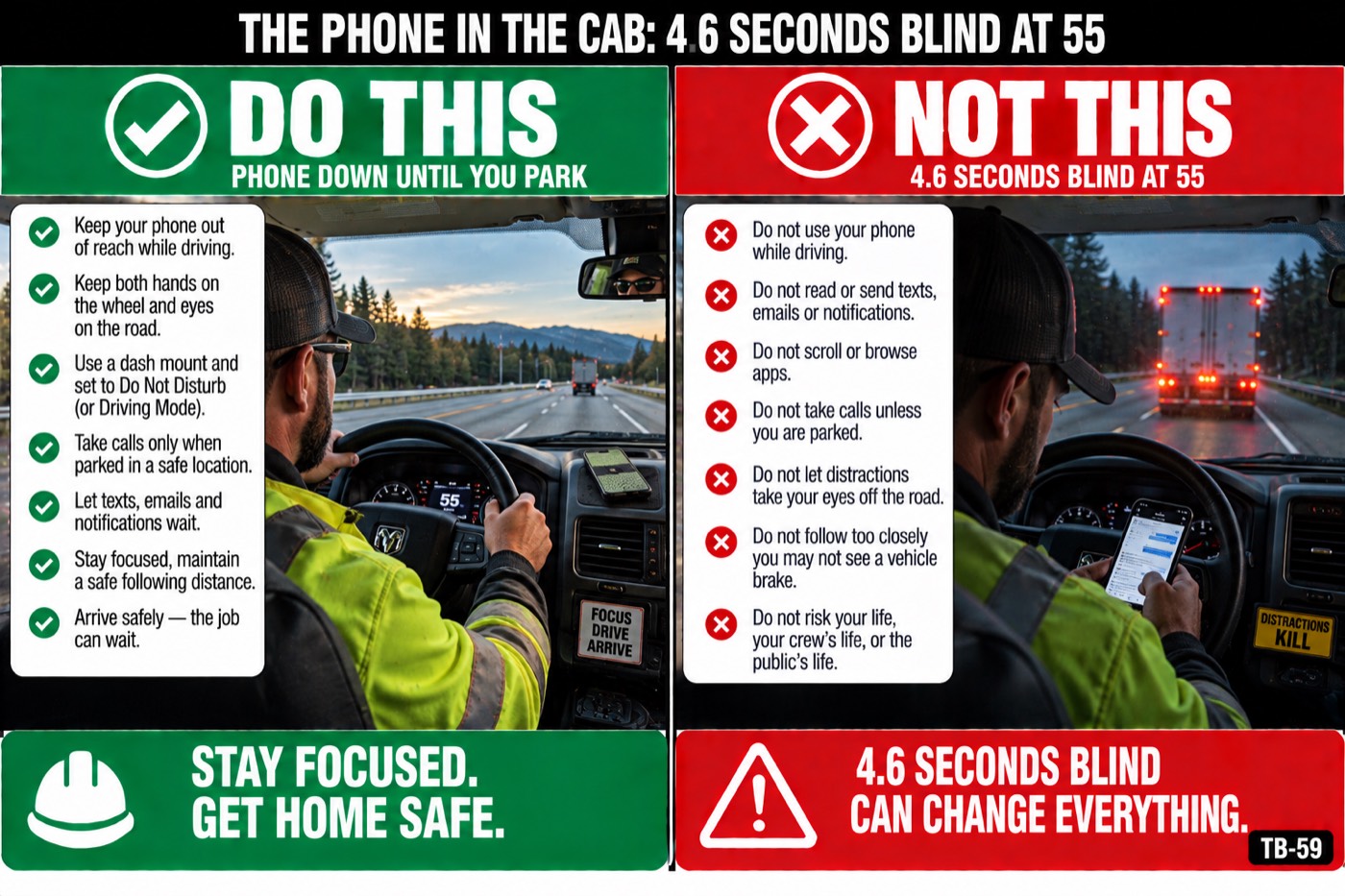
Reading or sending a text takes your eyes off the road for about 4.6 seconds. At 55 miles an hour that is the length of a football field driven with your eyes shut.
The points
- The crash that comes from a phone is a rear-end into stopped traffic or a drift across the center line, at full speed, with no braking, because the driver never saw it. Drivers texting are about 23 times more likely to end up in a crash or a near miss than drivers who are not.
- For a commercial motor vehicle, no driver holds a phone while driving, dials with more than one button, or reaches for a phone in a way that takes them out of a seated, belted position. Texting is banned outright. The company cannot allow it and gets fined alongside the driver.
- Driving includes sitting at a red light or stopped in traffic. It does not include pulled off the road and stopped where the truck can safely stay. That is the line: off the road and stopped, or the phone stays down.
- Hands-free is not risk-free. Your hands are on the wheel but your attention is in the conversation, and drivers on hands-free calls miss about half of what is in front of them. Keep calls short, and take the important ones parked.
- The company rule is the phone stays in the console or the door pocket until the truck is parked. Nobody on this crew has to answer the foreman while driving, and the foreman knows to wait.
Why it goes wrong
The 4.6-second number comes from instrumented trucks: cameras and sensors on real drivers over millions of miles. Texting drivers had their eyes off the road an average of 4.6 seconds out of every six. Dialing a phone was about six times riskier than driving normally; texting was about 23 times. Those are the numbers that got the federal rule written.
The rule for commercial motor vehicles bans holding a mobile phone to make a call, pressing more than a single button to start or end a call, and reaching for a phone in a way that requires leaving a seated, belted position. A separate rule bans texting, which includes reading email, browsing, and anything else you type or read on the screen. A phone mounted where you can hit one button, or a Bluetooth earpiece, is the legal way to take a call.
Penalties land on both sides. The driver is fined for each offense and repeat offenses take a CDL holder off the road for a stretch. The carrier is fined a larger amount for allowing or requiring it. A text from the office asking where you are, while you are driving, is the company creating the violation.
Hands-free removes the manual and visual part and leaves the cognitive part. Driving on a phone call, drivers look at the road but process less of it; they miss brake lights, pedestrians and signs that are right in front of them. Voice-to-text is not much better, because composing a message takes the same attention whether you thumb it or speak it.
Pickups under the CMV weight line are not covered by the federal rule, but most states have their own hands-free or texting bans, and the crash physics do not check the registration. The company rule covers every truck we own: the phone is put away before the truck moves.
Set the phone up before you roll. Navigation typed in and running, the call you need to make made, the phone in the console. If it rings, it can wait until the next place you can pull all the way off the road. A missed call costs a minute; a rear-end at 55 costs someone's life.
Questions for the crew
- Where is your phone right now when you drive, and where will it be on the drive back to the yard today?
- Who on this crew gets calls from the office or the foreman while driving, and what happens if they do not pick up?
- When was the last time you looked up from the phone and the traffic ahead had changed, and how close was it?
To close
Today every phone goes in the console before the truck moves, and nobody on this crew, including me, expects a call answered from behind the wheel.
To hold this talk with your crew
1
Read it aloud. Five minutes, before the work starts.
2
Ask the questions. A crew that talks is a crew that remembers.
3
Have them sign on their own phones, and the record is sealed.