Rain and hydroplaning: the tire that is floating
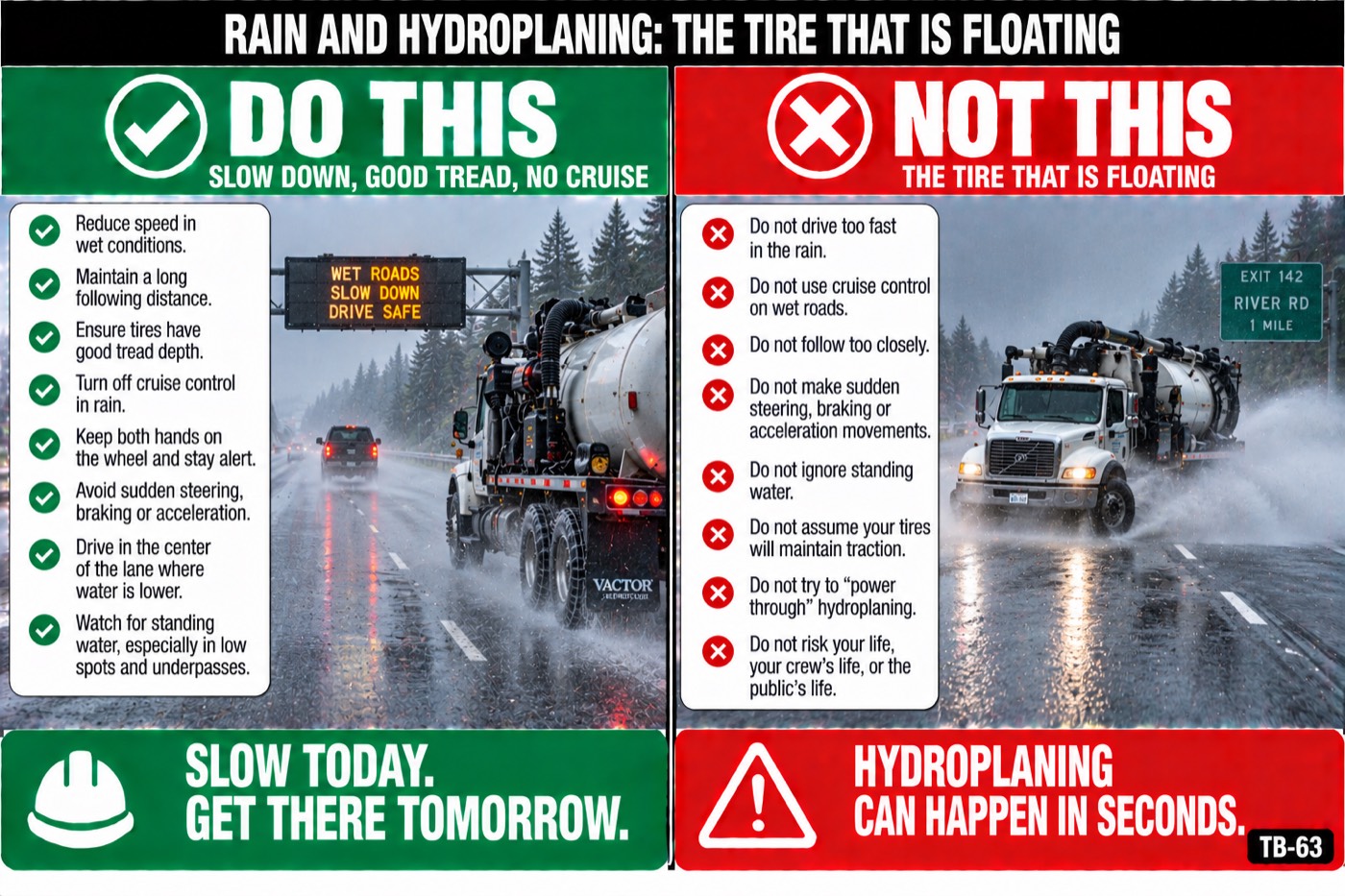
A tire can start hydroplaning at about 35 miles an hour in a tenth of an inch of water. On a worn tire it happens slower than that, and a truck with an empty bed floats the rear tires first.
The points
- Hydroplaning is the tire riding on water instead of pavement. Steering and brakes do nothing for the second or two it lasts, and a truck that is turning or braking when it happens spins or goes straight off the curve.
- The rule for commercial motor vehicles sets minimum tread: 4/32 of an inch on steer tires, 2/32 everywhere else, and no tire with exposed cord, a bulge or a cut to the belts. Good outfits replace work-truck tires at 4/32 all around, because the rule's minimum is where wet stopping distance has already doubled.
- The first 15 minutes of rain are the slickest, because oil and rubber dust on the road float before they wash off. Slow down at the first drops, not when it is pouring.
- Cruise control off in rain. If a tire starts to hydroplane with cruise on, the truck keeps power to the wheels and the spin comes faster. Ease off the throttle, hold the wheel straight, no brake, and wait for the grip to come back.
- Following distance goes to 6 seconds or more in rain, and headlights on with the wipers. A pickup pulling a trailer on a wet two-lane needs the room to stop without the trailer pushing it.
Why it goes wrong
The mechanism is a wedge of water building up in front of the tire faster than the tread grooves can channel it out. The tire lifts onto that wedge and contact with the pavement goes to zero. Speed, water depth and tread depth decide when it happens. New tread has grooves around 10/32 deep that move gallons a second; a tire at 4/32 moves less than half that, and at 2/32 the tire is nearly slick.
Tread depth is the number on the tire that matters most in rain. Check with a gauge, or a quarter: put it head-down in a groove and if the top of the head shows, the tread is under 4/32. Steer tires get the higher minimum in the rule because a steer tire that floats takes the steering with it. Uneven wear, a bulge or a cut down to cord is a tire that comes off the truck today.
Work trucks hydroplane differently from cars. A pickup with an empty bed has light rear tires that float first, and the back of the truck comes around. A truck with a heavy load and a trailer has the weight to push through water but needs far more distance to stop. Either way the lesson is the same: slower before the water, and no sudden inputs while in it.
The recovery is counterintuitive. Do not brake, because a braking tire that regains grip locks or grabs. Do not steer hard, because a tire that regains grip while turned snaps the truck sideways. Feet off both pedals, wheel straight or pointed gently where you want to go, and the truck settles back onto the pavement in a second or two. If the rear is sliding, steer toward the slide, gently.
Standing water in the wheel ruts of a worn road is where trucks hydroplane most. Move slightly out of the ruts if the lane allows, slow down for puddles you can see, and never drive through water you cannot see the bottom of; six inches of water can stall a pickup and take away control, and two feet of moving water can carry the truck off the road.
Rain hides the shoulder, the edge line and the car with no lights. Headlights go on with the wipers, and in heavy rain the right answer is often a pullout with the hazards on until the worst passes. Ten minutes on the shoulder beats the rest of your life.
Questions for the crew
- What is the tread depth on the truck you drove in today, and who measured it last?
- Which stretch of road on the way here holds water in the ruts, and how fast do you take it in rain?
- If the back of the truck stepped out on a wet curve this afternoon, what would your feet do?
To close
Today every driver checks tread with a gauge or a quarter before leaving, turns cruise control off when the wipers go on, and adds two seconds of following distance.
To hold this talk with your crew
1
Read it aloud. Five minutes, before the work starts.
2
Ask the questions. A crew that talks is a crew that remembers.
3
Have them sign on their own phones, and the record is sealed.