The truck on site: brake set, chocks, key out
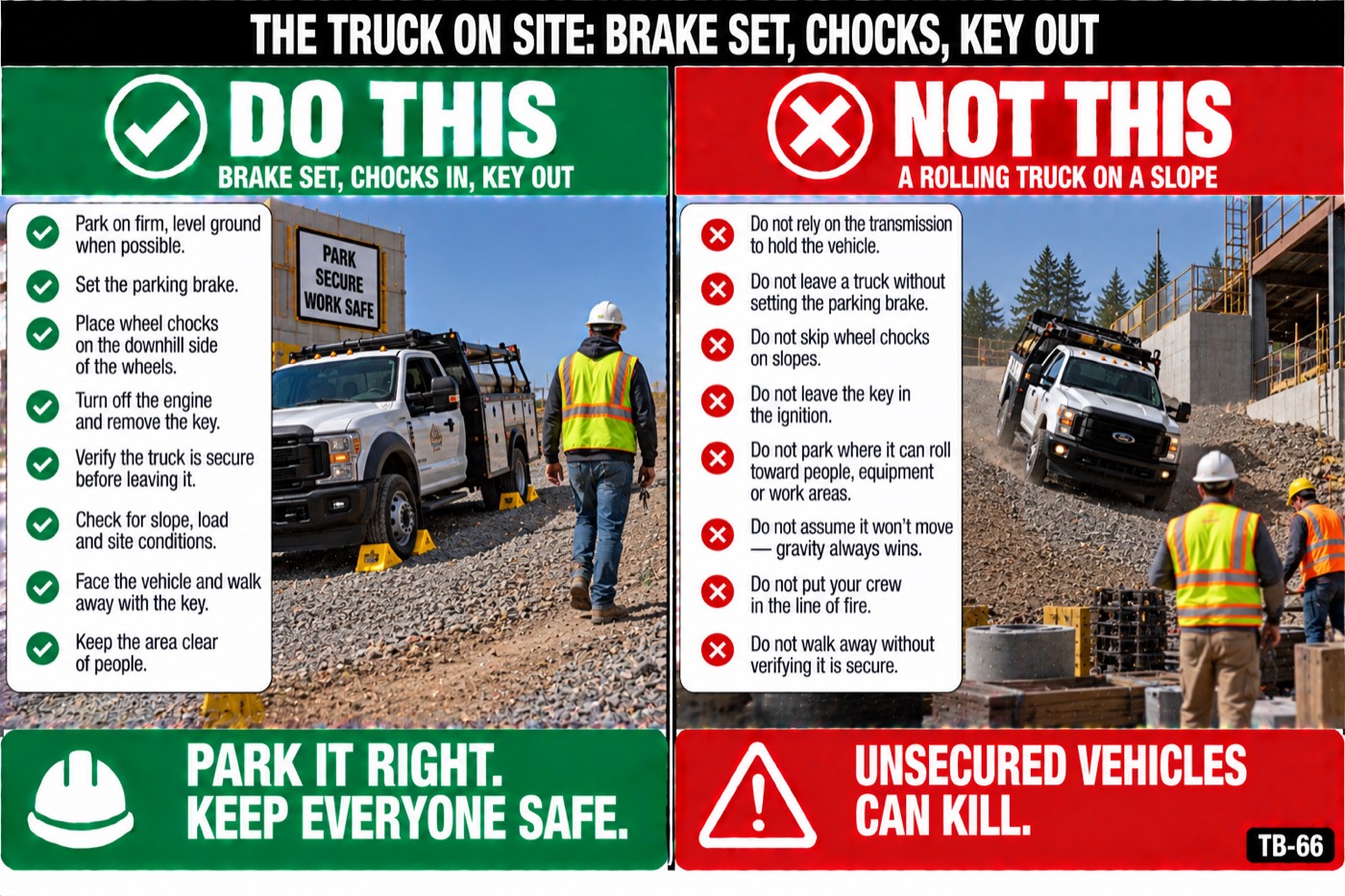
A three-quarter-ton pickup with a bed of material weighs about 8,000 pounds. Parked on a 5 percent grade in neutral with no parking brake, it starts rolling with about 400 pounds of push, which is a lot less than it takes to stop it.
The points
- The truck that kills on a job site is the one that rolls with nobody in it: into the trench, into the crew unloading the trailer, into the kid who wandered over from the house next door. The other one is the truck that catches fire at the fuel tank with the engine running.
- The rule for construction equipment is plain: whenever it is parked, the parking brake is set, and on an incline the wheels are chocked as well. That applies to the pickup and the service truck the same as the loader.
- Engine off, phone away and no smoking when fueling the truck, the generator or the cans. Fuel cans go on the ground to fill, never in the bed, because a plastic bed liner builds static that lights the vapor.
- The key comes out and the truck locks. A running truck on a job site with the door open is an invitation for a child, a passerby, or a crew member who does not know it is in gear.
- Park where you can pull out forward, nose out, away from the edge of the excavation and out of the swing of the equipment. Walk around the truck before you move it; a site changes every ten minutes and something is behind you that was not there when you parked.
Why it goes wrong
A rolling truck has no driver and no brakes, and it does not stop for anything smaller than it. The physics on a grade: the force pushing the truck downhill is the weight times the slope, so 8,000 pounds on a 5 percent grade is about 400 pounds, and once it is moving it builds speed fast. A transmission in park holds through a small steel pin; the parking brake is the thing designed to hold the truck. Set the brake first, then park, then chock on any grade, chocks against the downhill side of a rear tire.
Fueling fires come from static and from vapor. Gasoline vapor is heavier than air and pools around the fill; a spark from a running engine, a phone dropped on the ground, a static discharge from a can sliding on a bed liner, or a cigarette lights it. Put cans on the ground, touch the nozzle to the can before you open it, and fill slowly. Diesel does not ignite as easily but the same habits apply, and the generator or the compressor gets fueled cold, not running.
Keys in a running truck are how site deaths happen that nobody planned for. A crew member climbs in to move it, does not know the brake is off and the trailer is unhooked. A child from the neighborhood climbs in. A thief takes the truck with the tools. The rule is that if you are not in the seat, the key is in your pocket and the doors are locked. Idling for the air conditioning is not a reason.
The public is on every site that touches a street. Kids are drawn to trucks and to piles, and a child under 4 feet tall is invisible from the cab behind a tailgate. Park so you leave forward, walk all the way around the truck before you move, and if there are kids anywhere near the site, someone on the crew knows where they are before any truck moves.
Site parking is about the edge and the swing. A pickup parked within a few feet of an open excavation adds its weight to the load on that wall, and the rule for trenches keeps spoil and equipment back from the edge. A truck parked inside the swing radius of an excavator or the tail swing of a loader gets hit when the operator is watching the bucket. Park where the operator can see you and outside the radius.
The dump truck adds its own items: the bed comes down and the body prop is set before anyone works under a raised bed, the tailgate latch is checked before backing to the pile, and nobody is behind or beside the bed when it dumps. A raised dump bed under a power line is a fatal contact and it happens every year to someone who forgot the bed was up.
Questions for the crew
- Where is each truck parked right now, and which ones are on a slope without chocks?
- Who fueled the generator or the saw this morning, and was anything running at the time?
- Where are the kids or the public nearest to this site today, and who has looked?
To close
Today every truck on this site is parked with the brake set and the key out, chocked if it is on a grade, and nothing gets fueled with an engine running.
To hold this talk with your crew
1
Read it aloud. Five minutes, before the work starts.
2
Ask the questions. A crew that talks is a crew that remembers.
3
Have them sign on their own phones, and the record is sealed.