Wet concrete burns: the one you feel at dinner
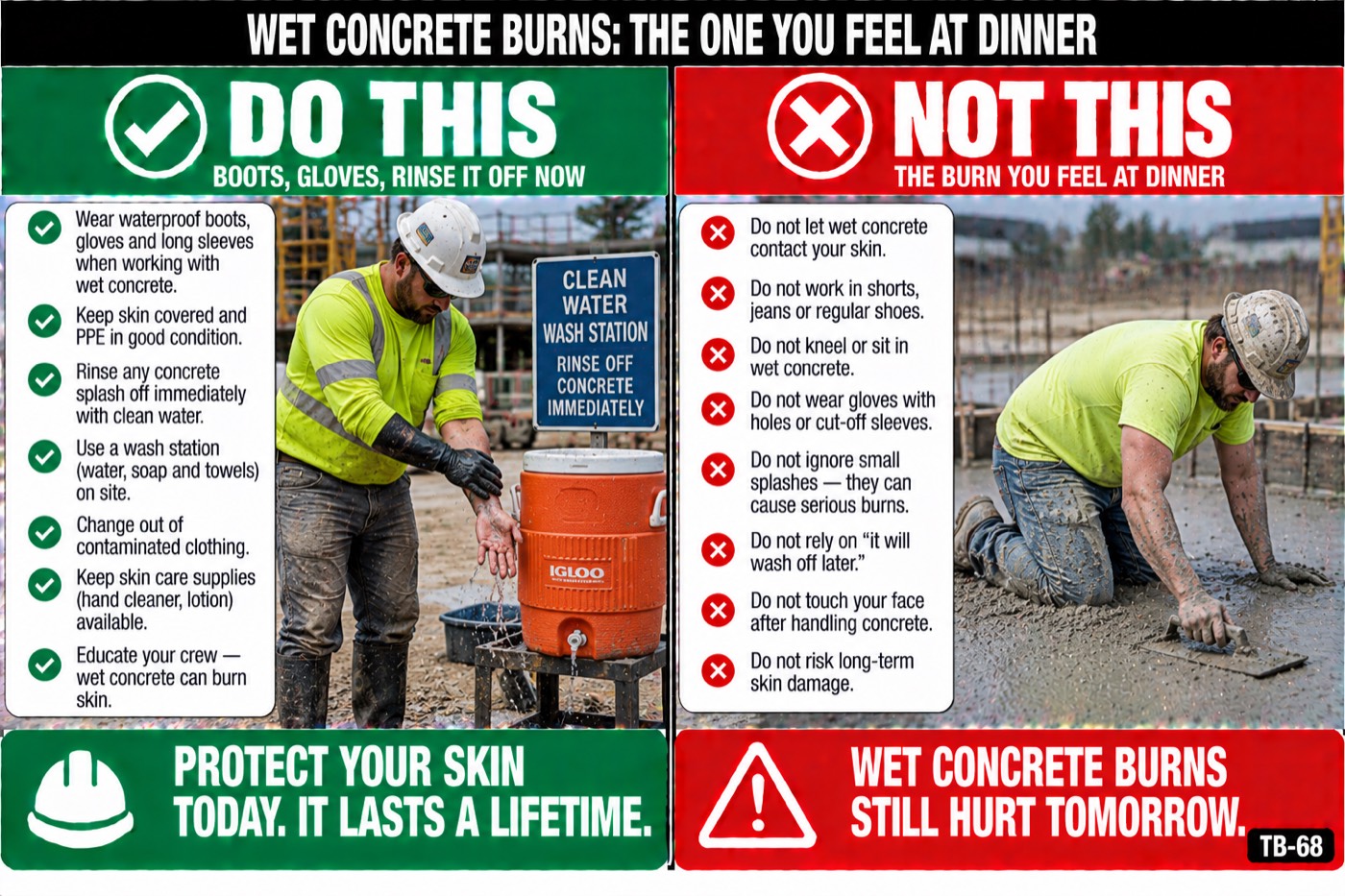
Wet concrete has a pH of 12 to 13. That is the range of oven cleaner, and it does not sting when it touches you.
The points
- Wet cement is caustic enough to eat through skin, and it does not hurt while it is doing it. Finishers have lost the skin on their shins down to the bone from kneeling in a pour for an afternoon.
- The cement in the mix is alkaline, pH 12 to 13, and it keeps burning as long as it is on you. The alkali dulls the nerves, so you feel it hours later, at dinner, when the damage is already done.
- Rubber boots high enough that concrete cannot slop in, waterproof gloves, long sleeves and long pants. Nitrile or rubber gloves, not the leather ones that soak it up and hold it against your skin.
- Concrete inside a boot or a glove comes out now, not at break. Pull it off, rinse the skin with clean water for several minutes, and put on a dry sock.
- Concrete in an eye is a hospital trip. Flush it with clean water for at least 15 minutes and get the person to a doctor the same hour, not the same week.
Why it goes wrong
Portland cement mixed with water makes calcium hydroxide, a caustic alkali that burns like lye. A lye burn does not stop at the surface the way an acid burn does. It keeps dissolving fat and tissue and working deeper for as long as the cement is in contact with skin, which is why a burn that looks like a red patch at 3 o'clock is an open wound by 9.
Two things hide it from you. Alkali damages the nerve endings, so the burn does not hurt while it is happening. And wet concrete on your knees also carries sand, so kneeling rubs the skin raw and opens it, which lets the cement in faster. Wet jeans against skin for two hours is the common case.
The typical injury is a finisher who kneels in fresh concrete in jeans for a couple of hours, goes home tired, and wakes up with second and third degree burns on both knees and shins. That is skin grafts and months off. Concrete slopping into a boot and staying there all afternoon does the same to an ankle.
Boots are rubber, tall enough for the pour, with the pant leg over the boot, not tucked into it, so the mud runs off instead of in. Knee boards or waterproof knee pads when you have to kneel. Gloves are nitrile, butyl or rubber. Cotton and leather gloves hold wet cement against the hand all day.
Wash with lots of clean water and a mild soap. Do not scrub, do not use solvents. Change out of concrete-soaked clothing instead of letting it dry on you. Cement also carries hexavalent chromium, which causes an allergic skin reaction that gets worse every exposure and has ended careers in this trade.
The rule is 29 CFR 1926.95: protective equipment wherever a chemical hazard can injure by physical contact. Wet cement is exactly that hazard, and the boots, gloves and a supply of clean water for rinsing are the equipment. If there is no water on the site where the pour is, there is no way to treat the burn when it starts.
Questions for the crew
- Where on this pour is somebody going to end up kneeling or standing in it, and what are they wearing there?
- Who has boots today that the mud can slop into over the top?
- Where is the clean water on this site if concrete goes into someone's eye or boot?
To close
Anybody who gets concrete inside a boot or a glove today stops and washes it out right then, and nobody kneels in it without boards or pads.
To hold this talk with your crew
1
Read it aloud. Five minutes, before the work starts.
2
Ask the questions. A crew that talks is a crew that remembers.
3
Have them sign on their own phones, and the record is sealed.