Pump lines: the hose that whips when it clears
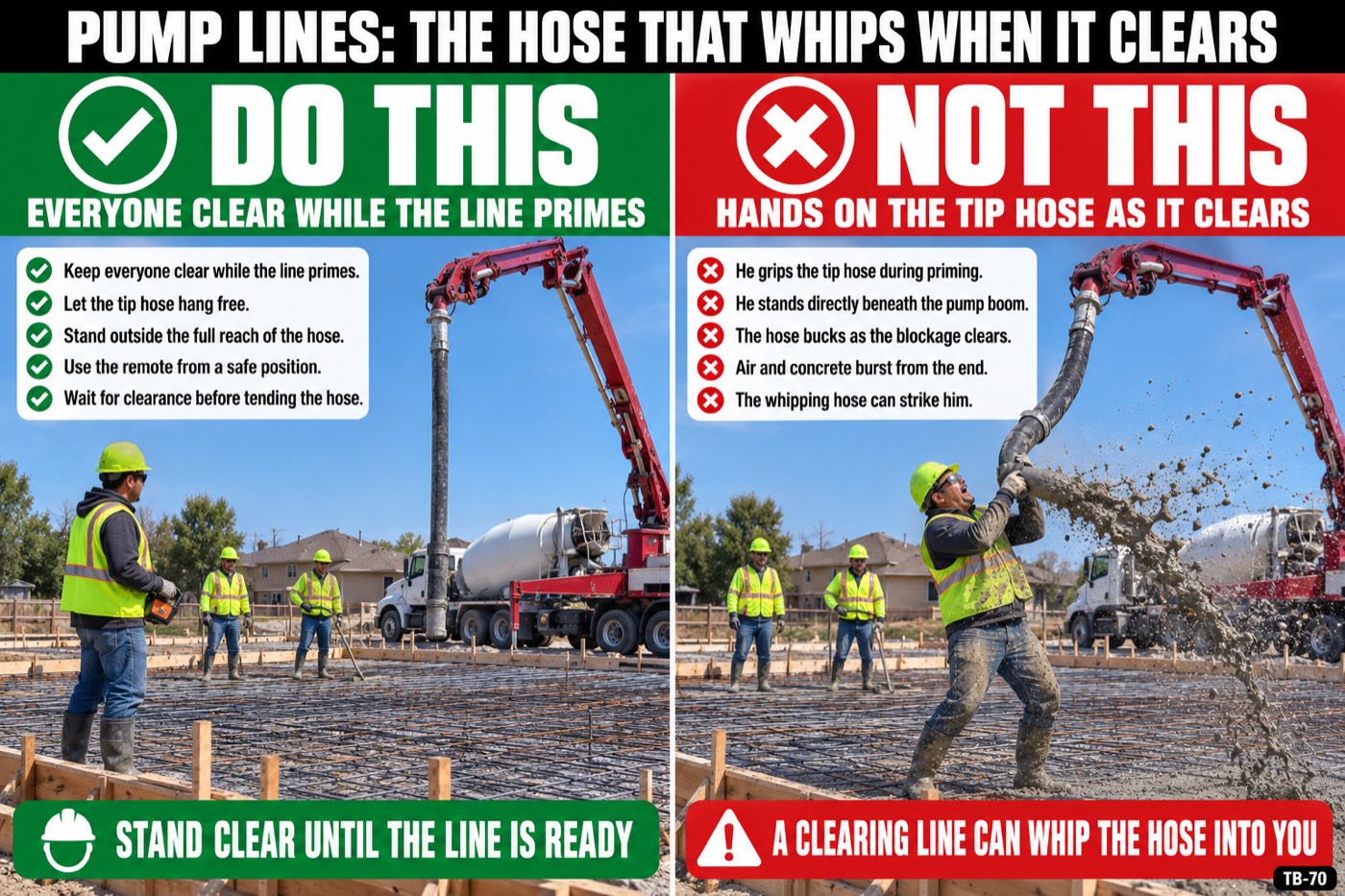
A 12-foot tip hose full of concrete weighs around 300 pounds. When a blocked line clears or air comes through, that hose swings at head height, and it moves faster than you can.
The points
- Hose whip has killed people standing at the end of the boom. Air in the line or a blockage lets go, and the tip hose swings hard enough to break a neck.
- Pipe, hose and clamps are rated for the pump pressure, and pipe supports are designed for 100 percent overload. A pipe section worn thin by concrete gets replaced, not taped.
- When the pump is priming, clearing a blockage, or blowing out, everybody is out from under the tip hose. Nobody holds the tip hose while the operator primes or works out a block.
- The operator runs the pump and only the operator runs it. The hose tender and the operator have a stop signal they both see or hear, and stop means the pump stops before anyone goes near the line.
- Blowing out the line with compressed air is the most dangerous part of the day. The catch basket is on, the line is secured, and the crew is clear of the discharge end before any air goes in.
Why it goes wrong
A concrete pump can push the line at over 1,000 PSI. A blockage stores that pressure behind a plug of concrete. When the plug lets go, the concrete and whatever air is behind it come through the tip hose all at once, and the hose flails. The person at the tip is inside the swing.
Air gets in the line when the hopper runs low and the pump sucks air with the concrete. That air compresses in the line and expands the instant it reaches the open tip, which is what makes a hose jump with no blockage at all. Keep the hopper full and the grate on, and if the hopper runs dry, everyone backs off the tip before the pump restarts.
The tip hose is 3 to 5 inches across and 10 to 12 feet long, and with concrete in it weighs around 300 pounds. The hose tender holds it at the hip, to the side, and never wraps it around a leg or an arm. No reducer, no double-ended hose and no metal end on the tip hose. A reducer at the end is where the plug forms, and a steel end is what breaks the skull.
Never open a clamp on a line under pressure. The operator reverses the pump to relieve the pressure first, then the clamp comes off. A clamp knocked open on a live line fires concrete and the clamp itself. The pipe sections themselves wear from the inside, and a worn section splits under pressure, so thickness gets checked and thin pipe comes out of service.
29 CFR 1926.702 says concrete pumping systems with discharge pipes get pipe supports designed for 100 percent overload, and air hoses on the system get fail-safe connectors. The boom near overhead power lines is its own talk. Keep the boom 20 feet from lines unless the utility has de-energized them.
Signals are radio or hand, and everyone on the placement knows the one for stop. The operator has to see the tip hose or have a spotter who does. Nobody gives the operator a reason to guess where the tip is.
Questions for the crew
- Who is on the tip hose today, who is the operator, and how do they signal stop?
- Where will everyone be when the line is primed and when it is blown out at the end?
- Is there a reducer, a double-ended hose or a steel end anywhere near the tip on this setup?
To close
Nobody stands at the tip hose while the pump is primed or a block is worked out today, and the stop signal stops the pump every time.
To hold this talk with your crew
1
Read it aloud. Five minutes, before the work starts.
2
Ask the questions. A crew that talks is a crew that remembers.
3
Have them sign on their own phones, and the record is sealed.