Masonry walls: braced until it is tied in
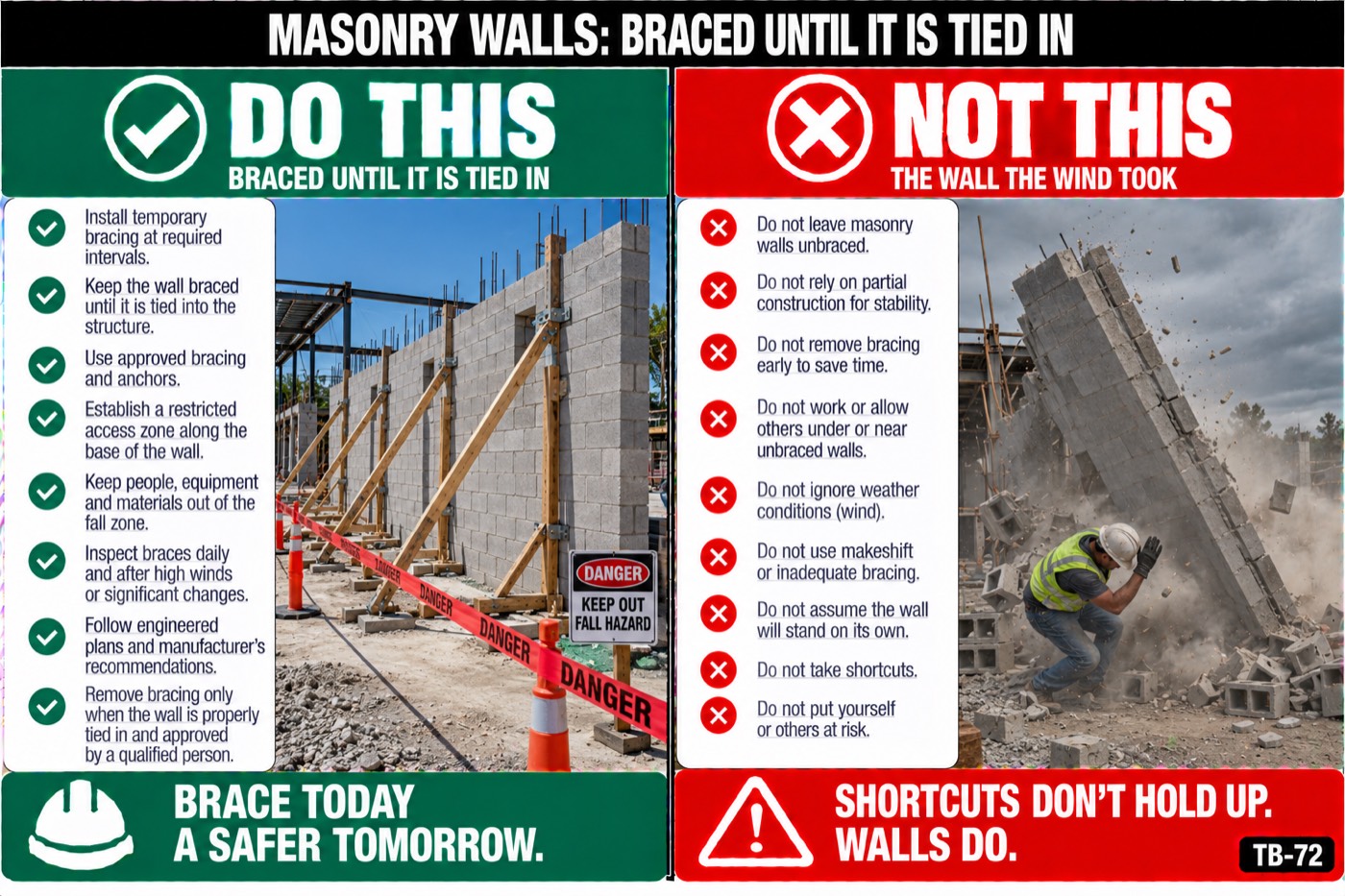
An 8-inch block wall 12 feet high and 40 feet long weighs about 25,000 pounds. Until it is braced or tied into the structure, the wind decides whether it stands.
The points
- Fresh masonry walls blow over onto the crews that built them. Green mortar has almost no strength in bending, so a wall that is not braced and not tied in goes over in the first strong gust, often at night or at lunch, and sometimes with somebody under it.
- A limited access zone goes on the unscaffolded side of every wall before you start it: as wide as the wall is high plus 4 feet, and running the full length of the wall. Only the masons building that wall go in it.
- Any masonry wall over 8 feet gets braced against overturning and collapse, and the bracing stays until the permanent structure that holds the wall up is in place.
- The zone stays until the wall is supported. The wall the crew finished Friday and walked away from is a wall nobody works near Monday until it is braced or tied in.
- Bracing means designed bracing at the spacing on the plan, anchored to a footing or a deadman. A couple of 2x4s kicked against the block is not bracing.
Why it goes wrong
A hollow 8-inch block wall weighs about 55 pounds per square foot, more where it is grouted. A 12 by 40 foot wall is around 26,000 pounds standing on an 8-inch base. The wind on that wall at 40 miles an hour is only about 2,000 pounds, but it pushes at the top, and the only thing resisting it is mortar that is days away from strength. That is why fresh walls go over in wind a finished building would never notice.
The zone is wall height plus 4 feet because that is where the wall lands if it goes: the wall lying flat plus the scatter. It is on the unscaffolded side because the scaffold side already has the masons on it and they know the wall. 29 CFR 1926.706 says the zone is set up before the wall starts, runs the whole length, and only the employees actively building the wall enter it.
The same rule says every masonry wall over 8 feet is adequately braced to prevent overturning and collapse, and the bracing stays until the permanent supporting elements of the structure are in place. Tied in means the roof deck, the bond beam and the connections that were designed to hold it, not a few dowels into a footing.
A bracing plan gives a wind speed at which the crew leaves the zone, often somewhere around 35 miles an hour, and a spacing and anchor for each brace. The braces are for the wall height as it stands that day. If the wall goes up faster than the bracing follows, the plan is not being followed.
The wall that blew over is usually the one everyone stopped thinking about: finished, unbraced, and left standing overnight at the edge of a lot where the crew parks the trucks and the delivery driver walks past. Add the excavator that backs into the base, or the pallet of block leaned against it, and the wall does not need wind.
What the foreman checks each morning: the zone is taped or fenced so a delivery driver can see it, every brace is on its anchor and tight, the forecast for the day, and where the crew is going to eat lunch. If the answer is in the shade of the wall, the answer changes.
Questions for the crew
- Where is the limited access zone on this wall today, and how is it marked so a delivery driver knows?
- What wind speed does our bracing plan say we clear the zone at, and what is today's forecast?
- Which walls on this site are up but not tied in yet?
To close
No wall over 8 feet stands unbraced tonight, and nobody but the masons is on the open side of a wall today.
To hold this talk with your crew
1
Read it aloud. Five minutes, before the work starts.
2
Ask the questions. A crew that talks is a crew that remembers.
3
Have them sign on their own phones, and the record is sealed.