Excavator demolition: nobody inside while it swings
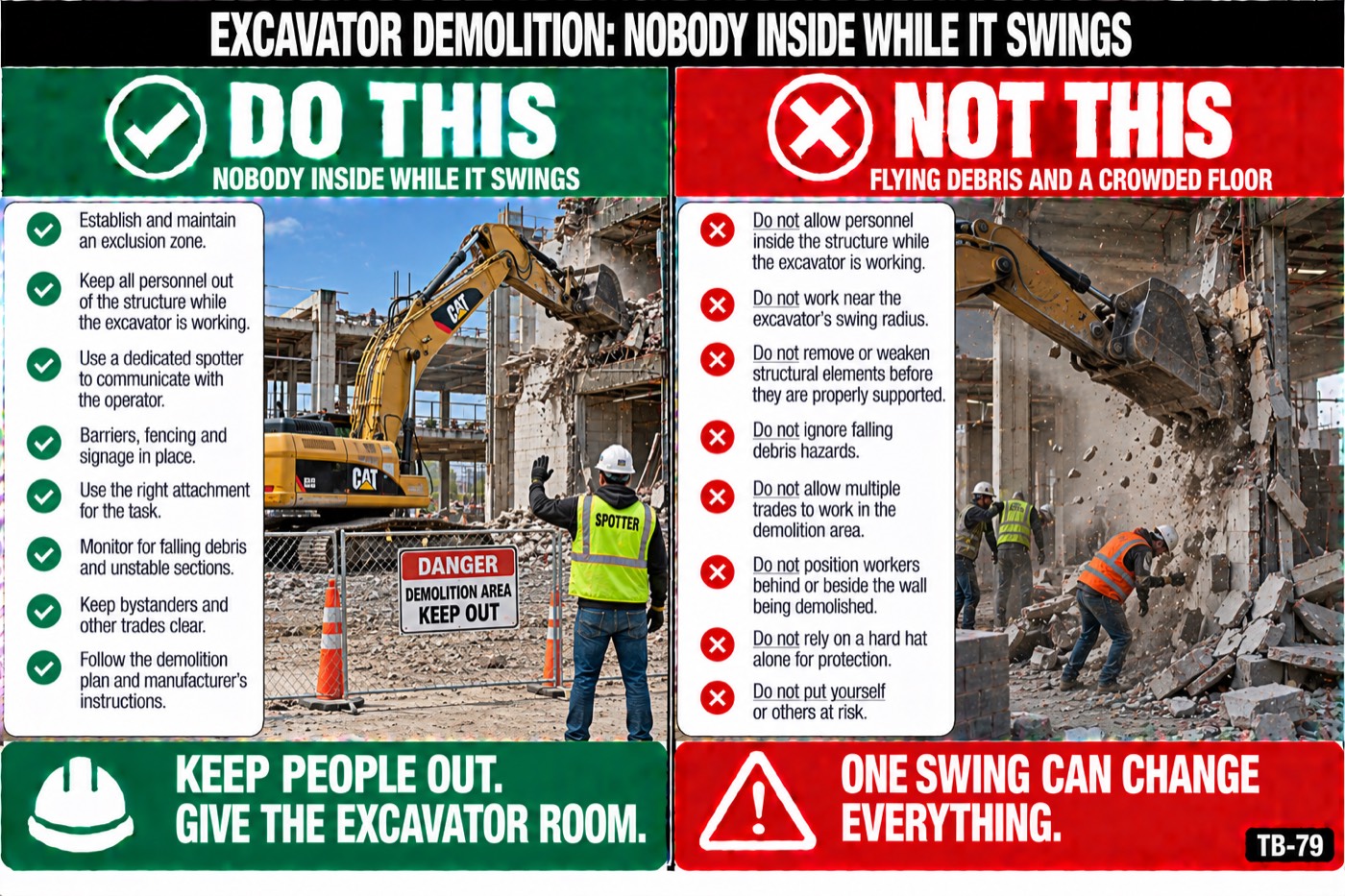
A 20-ton excavator's counterweight swings through about 9 feet behind the cab, and the stick reaches 30 feet in front. Everything in that circle is in the machine's way, including people.
The points
- Excavator demolition kills the person standing where the operator cannot see, or inside the building the machine is pulling on. The material comes down, the swing comes around, and a brick thrown off the bucket travels 50 feet.
- Nobody is inside the building or in any area the machine's work can affect while the machine is pulling, balling or clamming. Only the workers the job actually needs are anywhere near it, and they are where the operator can see them.
- The drop zone is marked and kept: nobody inside the machine's reach plus the height of what is being pulled, and the tail swing is barricaded so nobody walks behind the machine.
- Hand demolition and machine demolition do not happen in the same area at the same time. The crew with bars and saws works on the far side of a wall the machine will not touch today, or they wait.
- A competent person keeps inspecting as the work goes: weakened floors, leaning walls, loose material overhead. If something has moved, the machine stops until it is shored or brought down on purpose.
Why it goes wrong
The operator's blind spots are the right side and everything behind the counterweight. On a demolition job, dust takes away the rest. The operator and a spotter on the radio, the spotter where the operator can see them, and the machine stops when the operator loses sight of the spotter. Nobody approaches the machine without the operator lowering the attachment to the ground and giving a signal.
29 CFR 1926.859 says no workers are permitted in any area that can be adversely affected by demolition operations while balling or clamming is being performed, and only the workers necessary for the operation are in the area otherwise. It also requires continuing inspections by a competent person as the work progresses, to catch hazards from weakened floors and walls and loosened material, with work stopped until they are corrected.
Pulling a wall: the machine pulls toward itself with the wall folding in front of it, never pushing a wall away where the machine cannot see what it is falling on. The fall zone is at least 1.5 times the height of the wall, and material sprays past that. Pieces come off the top of a wall with the first pull, so nobody is anywhere near the base before the operator starts.
Flying material is glass, brick, rebar and concrete off the bucket and the shear. The cab has guards and a FOPS, the operator wears the seat belt, and everyone else is behind something solid or far enough away that a piece cannot reach them. A hydraulic breaker on a slab throws chips hard enough to take an eye at 30 feet.
The person inside the building is the one this talk is about. The crew member who goes in to cut a beam free while the machine holds it. The person who goes to check something on the second floor while the machine is pulling the first. The one who ducks in to grab a tool. Any of them is inside a structure that is being taken apart from outside. Before the machine pulls, every person on the crew calls clear, and the operator does not move until all of them have.
When the machine is on a floor rather than on the ground, the floor has to have been checked by the engineering survey for the machine's weight, and the same goes for the pile it drives onto. If the machine is a crane with a ball, the ball weighs no more than half the crane's rated load at that boom length and angle and a quarter of the line's breaking strength, and the boom is kept as short as the work allows.
Questions for the crew
- Where is the machine working today, where will everyone else be, and can the operator see them from the seat?
- What is the signal for stop, and who can give it?
- Is anybody going into the building while the machine is working, and why?
To close
Today the machine does not pull until everyone has called clear, and nobody is inside the building or behind the counterweight while it works.
To hold this talk with your crew
1
Read it aloud. Five minutes, before the work starts.
2
Ask the questions. A crew that talks is a crew that remembers.
3
Have them sign on their own phones, and the record is sealed.