Drain work: what is in the water and on the cable
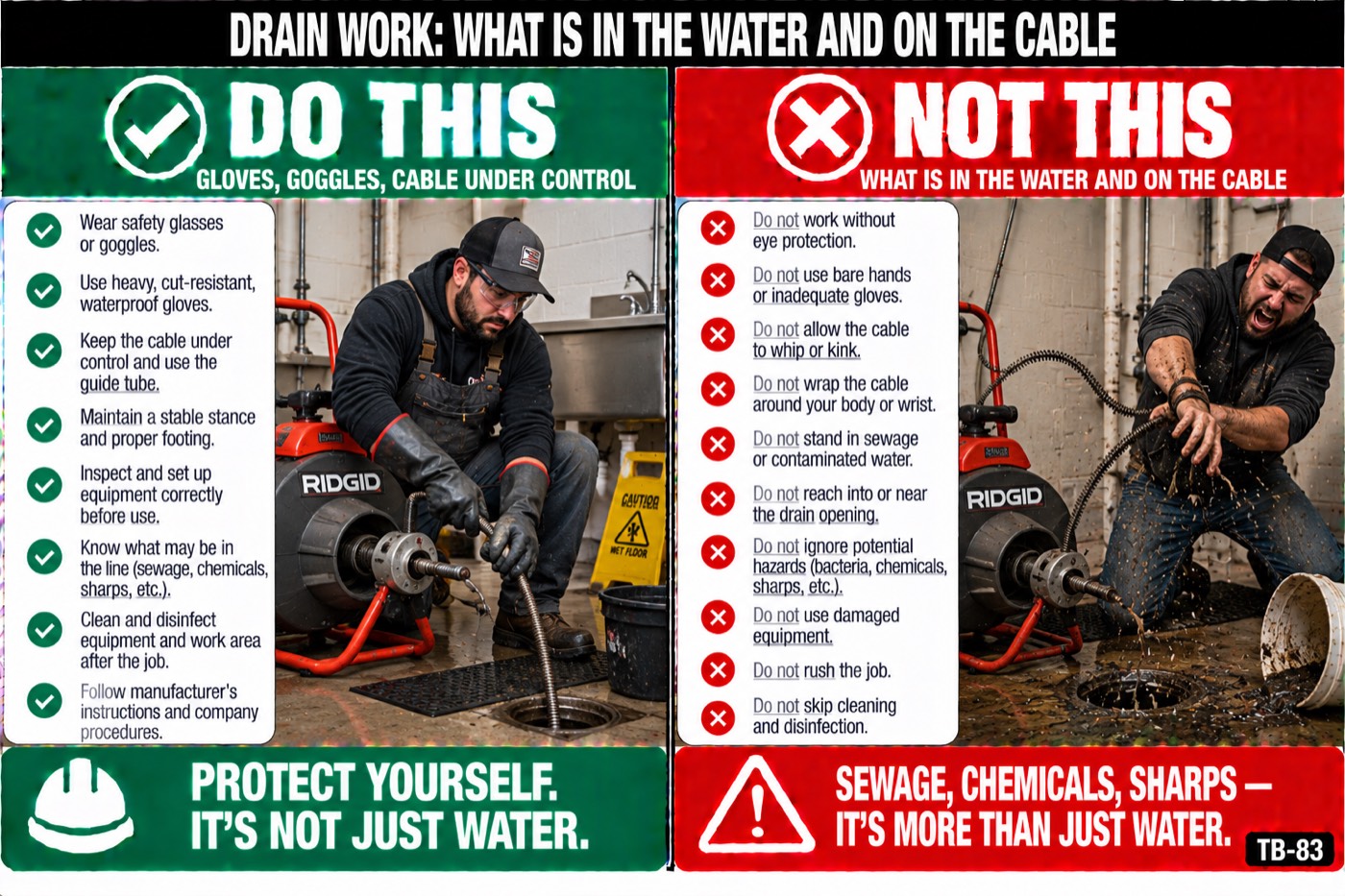
The 3/4-inch cable in a drum machine turns at a couple hundred RPM. When the cutter head catches a root, all of that torque comes back into whatever is wrapped around the cable, and that is usually a glove with a hand in it.
The points
- Two ways this work hurts you: the water that splashes back is raw sewage, and the cable that spins in your hands catches a glove and wraps it. The first gives you hepatitis A, tetanus in a cut, or a gut infection; the second breaks fingers or takes them.
- The rule is PPE for chemical and biological hazards you meet by absorption, inhalation or contact: gloves, eye protection and whatever else the exposure needs, provided and kept in usable condition. The bloodborne pathogen rule in 1910.1030 is general industry and is guidance here, but the vaccines it talks about are the ones that matter.
- Sewage on the skin gets washed off with soap and water, 20 seconds, before you eat, smoke, drink or touch your face. Cuts and scrapes get covered before the work and cleaned after. Hepatitis A vaccine is two shots and tetanus is every 10 years; if you do not know when yours was, find out.
- On the machine: the leather gloves the manufacturer sells, never cloth, never a glove with a loose cuff or a rag in your hand. Hands stay within 6 to 12 inches of the drum when feeding, the foot switch is under your foot and nobody else's, and the cable never runs while your hand is on it and your eyes are somewhere else.
- Kickback: when the head jams, let off the switch. Do not fight it, do not reverse it for more than a second or two, and do not let the cable loop up between the drum and the drain, because a loop that snaps straight is what breaks a wrist.
Why it goes wrong
Raw sewage carries hepatitis A, E. coli, salmonella, giardia, and tetanus in the soil that comes up with it. The route is hand to mouth: a splash on the glove, the glove on the sandwich, the coffee cup or the cigarette. Eye splashes and cuts are the other route. Hepatitis A shows up two to six weeks after and takes people off work for a month or more.
The drum machine turns the cable at roughly 200 to 400 RPM depending on the machine, through a 5/8 or 3/4-inch cable that stores torque like a spring. When the cutter head stops in a root ball, the cable winds up until it either snaps the head loose or lets go somewhere along its length. Hands, cloth gloves and loose clothing in that section go with it.
The manufacturer's leather gloves are riveted and stiff for a reason: leather tears loose from the cable where a cloth glove wraps and pulls the hand in. A rag held around the cable to keep clean does the same thing a cloth glove does. If the cable is throwing water, that is what the splash guard and the eye protection are for.
The foot switch is the safety. If the person feeding the cable is also the person on the switch, letting go stops the cable when something goes wrong. When the switch and the cable are in different hands, the person on the switch is watching the hands, not the drain, and stops on the word, not the scream.
Drain chemicals are still in the pipe. Lye and sulfuric acid drain cleaners poured in by the homeowner last night come back up with the water and burn skin and eyes. Ask what has been put down the drain, wear the glasses and the gloves for that answer, and if the water smells sharp, treat it as acid until you know better.
Sewer gas is hydrogen sulfide and methane. In a basement or a crawl space around an open cleanout it can sting the eyes and, in a bad case, drop you. A rotten egg smell that goes away is not the gas leaving; it is your nose giving up. Ventilate, and if someone gets dizzy at a cleanout, everyone comes out.
Questions for the crew
- Who on this crew has had the hepatitis A shots, and who knows when their last tetanus was?
- Where is the wash-up on this job today, and what does anyone do if there is no running water?
- Who is on the foot switch and who is on the cable, and what is the word that stops it?
To close
Today nobody runs a cable without the machine gloves and glasses, and nobody eats or smokes until their hands have been washed with soap.
To hold this talk with your crew
1
Read it aloud. Five minutes, before the work starts.
2
Ask the questions. A crew that talks is a crew that remembers.
3
Have them sign on their own phones, and the record is sealed.