Spray finishing: the vapor and the pilot light
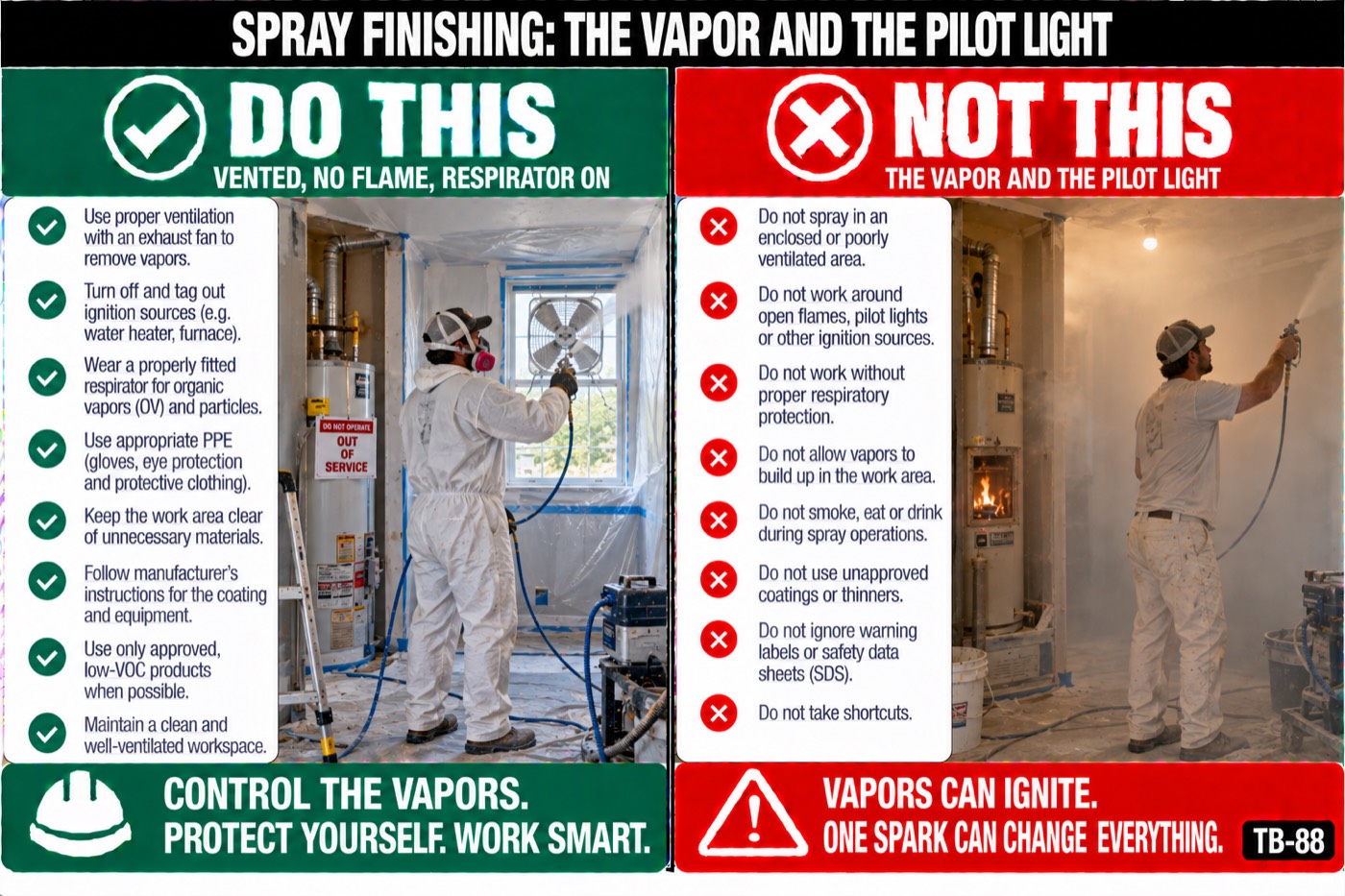
Lacquer thinner vapor burns at about 1 percent in air. In a closed 12-by-12 room you can spray your way to that in one coat, and the water heater in the next closet has been waiting for it.
The points
- Spraying solvent coatings in a closed room does two things at once: it fills the room with vapor that can flash from any spark, and it fills your lungs with solvent that no dust mask stops. The flash burns everyone in the room; the solvent takes years off the liver and the nervous system.
- The rule for spraying areas: no open flame or spark-producing equipment in the spraying area or within 20 feet of it unless a partition separates them, and mechanical ventilation that runs while you spray and long enough after to clear the vapor from the drying finish.
- Before the gun comes out: pilot lights off on the water heater and furnace, no space heater, no halogen work light, no fan unless the motor is rated for it, and nobody with a lighter. The vapor is heavier than air and goes under the door to the pilot you forgot.
- Ventilation is a fan pulling air out of the room through a window or a duct, with air coming in from the far side. It runs while you spray and for 30 minutes after. A closed room with the door shut to keep the overspray in is a closed room with the vapor in.
- Respirator: a half-face with organic vapor cartridges and a P100 prefilter, fit-tested, on a shaved face, cartridges changed on a schedule and not when you smell solvent. Two-part urethanes with isocyanates need supplied air, because you cannot smell them at the level that hurts you.
Why it goes wrong
The lower explosive limit for the common solvents in lacquer, oil-based enamel and conversion varnish is around 1 percent by volume: toluene 1.1, xylene 0.9, MEK 1.4, acetone 2.5. A gallon of solvent-based coating puts about half a gallon of solvent into the air as it dries. In a 12-by-12 room with 8-foot ceilings, that is enough to reach the explosive range near the floor before the walls are dry.
Ignition is not the cigarette. It is the water heater pilot in the closet, the furnace that cycles on, the static from a plastic bucket, the unrated fan motor, the switch on the work light. 1926.66(c)(2) puts the line at 20 feet from the spraying area for any open flame or spark-producing equipment. A pilot light you cannot see is still within 20 feet.
1926.66(d)(2) is the ventilation rule: mechanical ventilation adequate to move the vapor to a safe place, running during spraying and long enough after for the finish to give up its solvent. The exhaust fan is pulling vapor through its own motor, so it is rated for that or it is the spark. A box fan from the hardware store is not.
A dust mask does nothing for vapor. An N95 stops particles of paint, and the solvent goes straight through. Organic vapor cartridges absorb solvent until they are full, then pass it, and you may not smell it coming through. The change schedule comes from the cartridge maker and the coating, and a cartridge that was used yesterday and left in the truck overnight has kept absorbing from the air in the truck.
Isocyanates in two-part polyurethanes are a different problem. They cause asthma at levels below what you can smell, and once you are sensitized you react to a trace of it for the rest of your career. An organic vapor cartridge is not rated for them without a specific approval; supplied-air respirators are the standard for spraying them in an enclosed area.
The common mistake is the small room with the door shut to keep overspray off the rest of the house. Plastic on the doorway, a fan running inside to keep the finish moving, and the painter inside for an hour with a half-mask he has been using for two weeks. That is the closed box the rule is written about.
Questions for the crew
- What is being sprayed today, is it solvent-based, and what is in the SDS about the respirator?
- Where is every pilot light, heater and fan within 20 feet of the room, and who is turning them off?
- When were the cartridges in your respirator last changed?
To close
Nothing solvent-based gets sprayed inside today until the pilots and heaters within 20 feet are off, the exhaust fan is running, and everyone in the room is in a fit-tested respirator with fresh cartridges.
To hold this talk with your crew
1
Read it aloud. Five minutes, before the work starts.
2
Ask the questions. A crew that talks is a crew that remembers.
3
Have them sign on their own phones, and the record is sealed.