Speaking up before something goes wrong
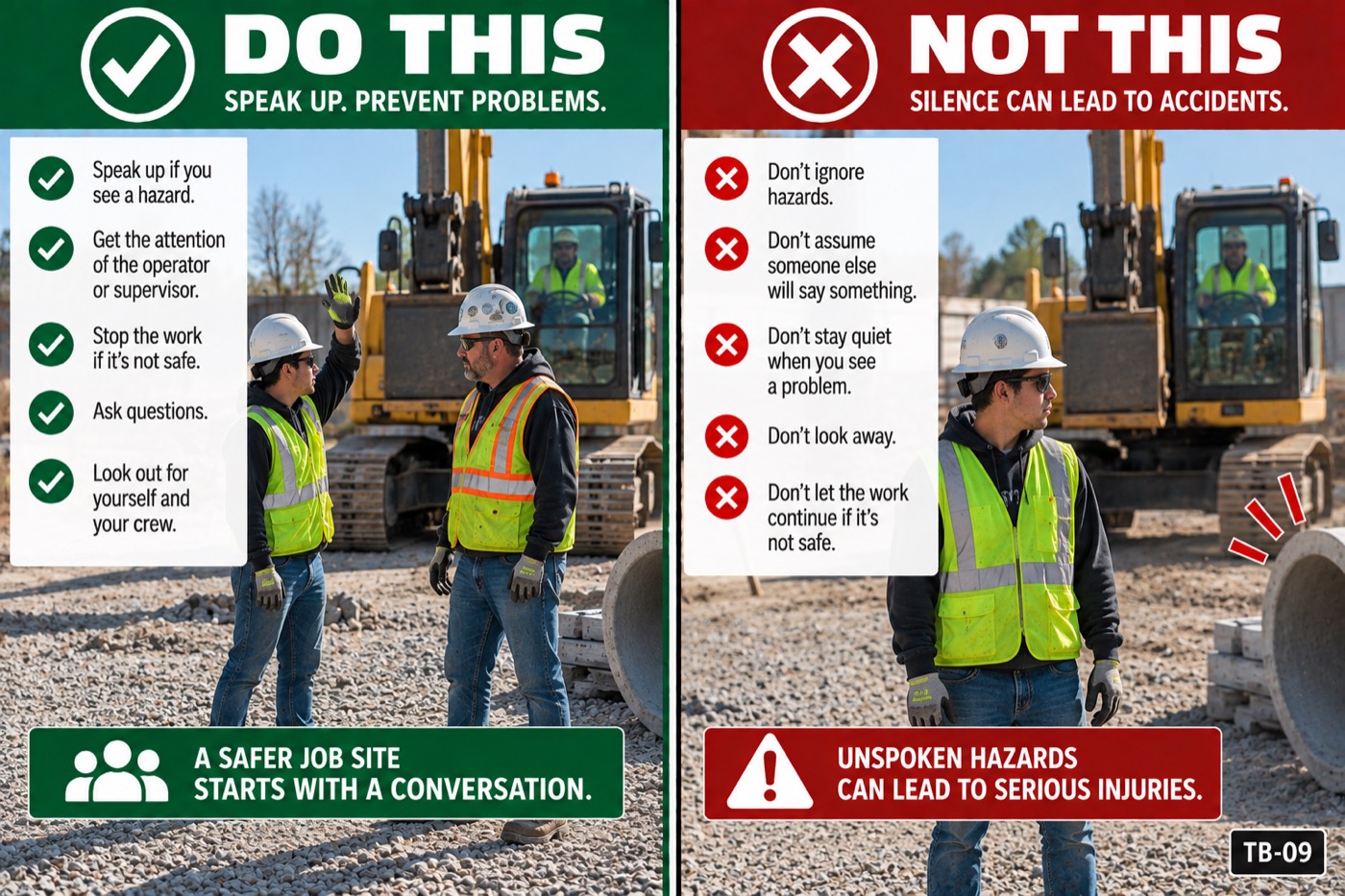
I would rather stop this job ten times for nothing than not stop it the one time it mattered.
The points
- If something looks wrong, say it. The cost of being wrong is a moment of awkwardness. The cost of staying quiet can be someone's life.
- On this crew, you can stop any work you believe is unsafe, and nobody here will hold it against you.
- New people see hazards that the rest of us have stopped noticing. Ask them what looks strange.
- If you raise something and nothing changes, raise it again, higher up.
- Report near misses. A near miss is a free lesson nobody had to bleed for.
Why it goes wrong
Most serious incidents were visible to someone beforehand. In investigation after investigation, somebody says they thought it looked wrong but didn't want to slow the job down or seem like they didn't know what they were doing.
The crews with the best safety records aren't the ones with the most rules. They're the ones where a first-year apprentice can tell a foreman to stop and get thanked for it.
What actually stops people speaking up is rarely fear of being disciplined. It is the fear of looking stupid, and of being the one who cost everybody twenty minutes. That is a real social cost and pretending it does not exist is why 'just say something' on its own never works. The only thing that removes it is what happens the first time somebody does - if that goes well in front of the crew, the next person speaks up.
New people are the most valuable and the least likely to talk. They have not yet stopped noticing the things the rest of us walk past, and they are the ones most worried about seeming green. Asking them directly what looks strange gets information no amount of experience on the crew will produce.
Near misses are the free version of this. Nothing was damaged and nobody was hurt, so there is no incentive to mention it - which means the same setup stays in place until the day it does not miss.
Questions for the crew
- Has anyone here ever kept quiet about something that turned out to matter?
- What makes it hard to speak up on this crew?
- What would you want to happen if you stopped work and turned out to be wrong?
To close
If something looks wrong today, say it out loud. You will not hear about it from me afterward.
To hold this talk with your crew
1
Read it aloud. Five minutes, before the work starts.
2
Ask the questions. A crew that talks is a crew that remembers.
3
Have them sign on their own phones, and the record is sealed.